Invisalign Aligner Hygiene and Care: The Complete Guide to Keeping Your Aligners Spotless

Invisalign Aligner Hygiene and Care: Complete Guide
Invisalign Aligner Hygiene and Care: The Complete Guide to Keeping Your Aligners Spotless
You've just started your Invisalign treatment, or you're about to? Congratulations! Now, let's talk about a CRUCIAL aspect that many people overlook: the hygiene and care of your aligners. As a certified Invisalign orthodontic assistant, I see the difference every day between patients who master their hygiene routine and those who... let's say, have aligners that speak for themselves (and not in a good way!). Here's everything you need to know to keep your aligners crystal clear, odour-free, and in excellent condition.
Why Aligner Hygiene Is So Important
Your Invisalign aligners spend 22 hours a day in your mouth. That's a warm, moist, bacteria-filled environment. Without proper care, your aligners can:
- Develop unpleasant odours (very embarrassing during close conversations)
- Become stained and turn yellowish (goodbye "invisible" look!)
- Accumulate bacteria and tartar (risk of cavities and gingivitis)
- Cause chronic bad breath
- Irritate your gums and create inflammation
The good news? With a simple 5-minute daily routine, your aligners will stay spotless throughout their entire wear period (7-14 days)!
Daily Hygiene Routine: The Step-by-Step Guide
Morning Routine (5 minutes)
Step 1: Remove the Aligners Correctly
- Use your fingers (not your teeth!) to dislodge the aligner
- Start from the back (molars) and work your way forward
- Pull downward/upward (not outward to avoid warping)
- Tip: If difficult, use an "outie tool" or your fingernails under the edge
Step 2: Rinse Immediately with Lukewarm Water
- Rinse your aligners as soon as you remove them to prevent saliva from drying
- NO hot water! (warps the plastic and ruins the fit)
- Lukewarm or cold water only
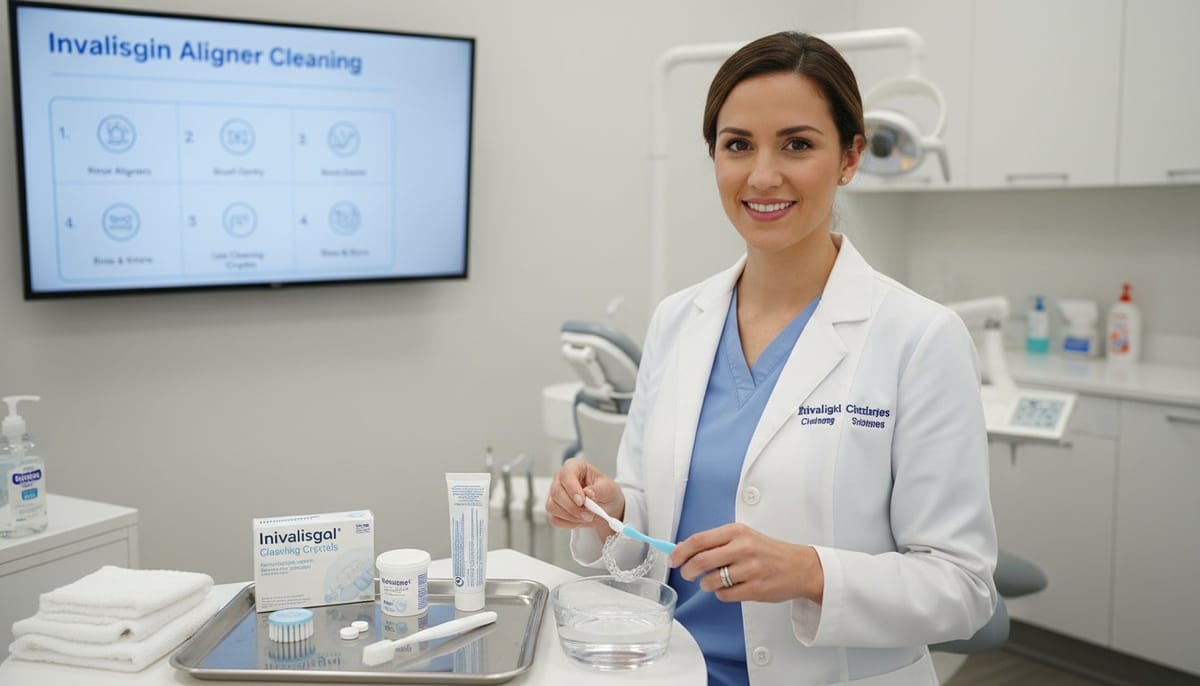
Step 3: Brush Your Aligners
- Use a dedicated soft-bristle toothbrush (not the one for your teeth)
- Mild antibacterial soap OR non-abrasive toothpaste
- Gently brush the inside AND outside for 30-60 seconds
- Focus on areas where tartar accumulates (near attachments)
- Avoid whitening or highly abrasive toothpastes (they scratch the plastic)
Step 4: Rinse Thoroughly
- Rinse until no trace of soap/toothpaste remains
- Visually inspect — the aligners should be clear and transparent
Step 5: Soak (During Your Dental Routine)
- While you brush your teeth and floss, let your aligners soak in:
- Option 1: Retainer Brite cleaning crystals (recommended)
- Option 2: Denture cleaner (Polident, Efferdent)
- Option 3: 50/50 solution of lukewarm water and 3% hydrogen peroxide
- Option 4: Diluted white vinegar solution (1 part vinegar, 3 parts water)
- Duration: 10-15 minutes maximum
Step 6: Brush YOUR Teeth Thoroughly
- Complete 2-minute brushing (morning and evening)
- Dental floss or interdental brushes
- Antibacterial mouthwash if desired
- NEVER put your aligners back on dirty teeth!
Step 7: Rinse and Reinsert the Aligners
- Rinse the aligners after soaking
- Inspect — they should be clear, odour-free, with no residue
- Place them back on clean, dry teeth
- Use the "chewy" for 5 minutes to ensure proper fit
Evening Routine (5 minutes)
Repeat EXACTLY the same routine as the morning! This is crucial because you wear your aligners all night — they must be spotless.
After Each Meal/Snack (2-3 minutes)
Quick Minimal Routine:
- Remove the aligners
- Rinse with lukewarm water
- Brush your teeth (ideally) OR vigorously rinse your mouth with water
- Rinse the aligners again
- Reinsert
If No Access to a Toothbrush:
- Plan B: Vigorously rinse your mouth with water
- Chew sugar-free Xylitol gum (with aligners REMOVED!)
- Use toothpicks or portable dental floss
- Brush as soon as possible
Important: NEVER put your aligners back in immediately after eating without at least rinsing your mouth — that's a recipe for cavities!
Deep Cleaning: Options and Methods
RETAINER BRITE
Top Recommendation
Advantages:
- Specifically formulated for aligners
- Deep cleaning without abrasion
- Eliminates bacteria, plaque, and odours
- Maintains aligner clarity
How to use:
- 1 tablet in lukewarm water
- Soak aligners for 15 minutes
- Lightly brush after soaking
- Rinse thoroughly
Frequency: 1-2 times per day (morning and/or evening)
Cost: ~$30-40 for 50 packets (approximately 25-50 days depending on usage)
2. Denture Cleaners (Polident, Efferdent, etc.)
Popular budget-friendly alternative
Advantages:
- Very effective for cleaning and disinfecting
- Easily available at pharmacies
- Affordable (~$10-15 for 120 tablets)
- Unscented formulas available
How to use:
- 1 tablet in lukewarm water
- Soak for 10-15 minutes MAX (no longer!)
- Rinse VERY well afterward (unpleasant taste otherwise)
- Lightly brush
Caution: Some users report slight bleaching/cloudiness with prolonged use. Alternate with other methods if you notice this.
Frequency: Once per day (usually in the evening)
3. Hydrogen Peroxide 3%
Effective and affordable home option
Advantages:
- Powerful antibacterial agent
- Natural whitening
- Very affordable
- Available at pharmacies
How to use:
- 50% hydrogen peroxide 3% + 50% lukewarm water solution
- Soak for 10-15 minutes
- Brush after soaking
- Rinse thoroughly
Frequency: 1-2 times per week (not daily — can be too harsh)
4. Distilled White Vinegar
Natural disinfection option
Advantages:
- Natural antibacterial agent
- Dissolves mineral deposits
- Very affordable
- Natural and non-toxic
How to use:
- 1 part vinegar + 3 parts lukewarm water solution
- Soak for 15-20 minutes
- Brush well afterward
- Rinse THOROUGHLY (vinegar taste may linger otherwise!)
Drawback: Vinegar smell and taste may persist if rinsing is insufficient
Frequency: 2-3 times per week
5. Mild Antibacterial Soap
Simple option for basic daily cleaning
Advantages:
- Simple and accessible
- Affordable
- Effective for surface cleaning
How to use:
- A few drops of mild soap on a toothbrush
- Brush aligners for 1-2 minutes
- Rinse thoroughly
Avoid: Scented, coloured, or harsh soaps
Frequency: 2-3 times per day (morning, afternoon, evening)
What to ABSOLUTELY Avoid
1. HOT WATER
Consequence: Irreversibly warps the SmartTrack plastic. Your aligners will no longer fit correctly and will need to be replaced (additional cost!).
Safe temperature: Lukewarm at most (comfortable to the touch)
2. WHITENING OR HIGHLY ABRASIVE TOOTHPASTES
Consequence: Micro-scratches that make the aligners cloudy and visible. The "invisible" look is lost.
Alternatives: Mild soap, sensitive teeth toothpaste (less abrasive), or Invisalign crystals
3. COLOURED MOUTHWASH (blue, green Listerine, etc.)
Consequence: Stains the aligners. They become yellowish, greenish, or bluish.
Alternatives: Clear/colourless mouthwash only
4. HARD-BRISTLE TOOTHBRUSHES
Consequence: Scratches the aligner surface, making them cloudy and visible.
Solution: Always use a SOFT or EXTRA-SOFT brush
5. DISHWASHER
Seriously, I've seen it happen! Hot water + harsh detergent = completely warped and unusable aligners.
6. RUBBING ALCOHOL OR HARSH CHEMICALS
Consequence: Can degrade the material and cause a dangerous chemical reaction.
7. LETTING SALIVA DRY ON THE ALIGNERS
Consequence: Odours, white deposits that are hard to remove, bacterial buildup.
Solution: ALWAYS rinse immediately after removal
8. CLEANING ONLY ONCE A DAY (or worse, not at all!)
Consequence: Rapid buildup of bacterial biofilm, odours, risk of cavities and gingivitis
Absolute minimum: Cleaning morning AND evening
Common Problems and Solutions
Problem #1: Aligners Turning Yellow
Causes:
- Coffee, tea, red wine with aligners in
- Cigarettes/vaping
- Coloured mouthwash
- Tartar and plaque buildup
Solutions:
- Prevention: ALWAYS remove aligners for beverages other than water
- Treatment: Hydrogen peroxide soak 2-3x/week
- Tip: Brushing with baking soda (1x/week max)
- Reality: If very yellow, wait for the next set (you change every 7-14 days anyway!)
Problem #2: Persistent Unpleasant Odour
Causes:
- Insufficient cleaning
- Bacteria and biofilm buildup
- Reinserting aligners on dirty teeth
- Not cleaning after each meal
Solutions:
- Intensify cleaning: Soak 2x/day with Invisalign crystals or Polident
- More vigorous brushing: Focus on the inside of the aligner
- Impeccable dental hygiene: The problem often comes from your teeth, not the aligners!
- Replace your toothbrush: A worn brush doesn't clean effectively
Problem #3: White/Calcified Deposits on Aligners
Cause: Accumulation of saliva minerals (tartar)
Solutions:
- Vinegar soak: Effectively dissolves mineral deposits
- Targeted brushing: Use a soft electric toothbrush on affected areas
- Prevention: Rigorous cleaning at least 2x/day
Problem #4: Aligners Becoming Cloudy/Opaque
Causes:
- Scratches from overly vigorous brushing or hard brush
- Abrasive toothpaste
- Normal wear at end of cycle (day 12-14)
Solutions:
- Prevention: SOFT brush only, mild soap or Invisalign crystals
- If already cloudy: Unfortunately irreversible. Wait for the next set.
- Consolation: You change aligners frequently anyway!
Storage and Transport: Best Practices
Storage at Home
- ALWAYS in their case when not in your mouth
- Clean, dry case
- Wash the case daily with soap and water
- Never leave aligners exposed to open air (they collect dust and bacteria)
- Avoid hot locations (sunny windowsill, near radiator)
On the Go/At Work
Essential Invisalign Portable Kit:
- Rigid aligner case
- Foldable or travel toothbrush
- Mini toothpaste
- Portable dental floss or interdental picks
- Small pocket mirror
- A few Invisalign crystal packets or Polident tablets
- Small bottle of rinsing water
- Tissues or small towel
FATAL MISTAKE TO AVOID: Wrapping your aligners in a napkin at the restaurant! This is the #1 cause of lost aligners (accidentally thrown in the trash). ALWAYS use the case.
At Restaurants/Social Outings
Discreet protocol:
- Excuse yourself to the bathroom before the meal
- Remove your aligners discreetly in a private stall
- Quickly rinse with water
- Store in the case (NEVER in your pocket or bag without protection!)
- Enjoy your meal!
- After the meal, return to the bathroom
- Brush your teeth ideally (or at least rinse vigorously)
- Rinse the aligners
- Reinsert
Frequently Asked Questions About Hygiene
Q: How many times a day should I clean my aligners?
A: Minimum 2 times (morning and evening) with complete brushing. After each meal, at minimum rinse thoroughly. Ideally, brush after each main meal.
Q: Can I use regular toothpaste?
A: Yes, BUT avoid whitening or highly abrasive formulas. Prefer toothpaste for sensitive teeth (less abrasive) or simply mild antibacterial soap.
Q: My aligners smell bad despite cleaning. What should I do?
A:
- Check your dental hygiene (the problem often starts there!)
- Intensify soaking: 2x/day with Retainer Brite crystals or Polident
- Replace your toothbrush
- See your dentist — you may have early gingivitis or cavities
Q: How long do aligners really stay "invisible"?
A: With rigorous care, they stay clear and invisible throughout their entire wear period (7-14 days). Without proper care, they can turn yellow and cloudy as early as days 3-5.
Q: Can I sleep with dirty aligners?
A: NO! That's a very bad idea. You'll sleep 7-8 hours with bacteria trapped against your teeth = recipe for cavities and gingivitis. ALWAYS clean before bed.
Q: What if I forgot my cleaning kit while travelling?
A:
- Buy a travel toothbrush at any pharmacy or convenience store
- Use mild hand soap from the hotel
- Rinse thoroughly after each meal
- Find a drugstore to buy Polident or hydrogen peroxide
Q: My aligners have a small stain. Should I replace them?
A: No, unless it really affects the aesthetics. You'll be changing aligners in a few days anyway! Try a hydrogen peroxide soak to lighten it. If it's truly bothersome, contact the clinic.
The Impact of Good Hygiene on Your Treatment
Benefits of Rigorous Hygiene:
- Truly invisible aligners from day 1 to day 14
- Consistently fresh breath
- Optimal gum health (confirmed by scientific studies)
- Zero cavities during treatment (vs. high risk with poor hygiene)
- Maximum comfort (no gum irritation)
- Social confidence (no embarrassment during close conversations)
- Optimal treatment (reduced inflammation = more effective tooth movements)
Consequences of Neglected Hygiene:
- Visible, yellowed, cloudy aligners
- Chronic bad breath
- Gingivitis and gum bleeding
- High risk of cavities (particularly on lingual surfaces)
- Discomfort and irritation
- Social embarrassment
- Potentially: slowed or interrupted treatment if serious dental problems arise
My Personal Advice as an Orthodontic Assistant
The Secret of Patients Who Succeed
After accompanying hundreds of Invisalign patients, here's what I've observed:
The happiest patients with their treatment aren't necessarily those with the simplest cases. They're the ones who master their hygiene routine.
An impeccable hygiene routine gives you:
- Always invisible aligners (nobody knows you're in treatment)
- Fresh breath that gives you confidence
- Zero dental problems during treatment
- Quick, positive follow-up appointments (no hygiene lectures!)
My personal recommended routine (the one I share with all my patients):
- Morning: Brush aligners with mild soap + 15-minute soak in Polident while getting ready
- Midday: Rinse aligners + quick tooth brushing at the office (keep a kit at work)
- Evening: Brush aligners with soap + 15-minute soak in Polident during evening routine
- 1-2x/week: Hydrogen peroxide soak for deep whitening and disinfection
This routine takes 10 minutes per day total. That's the price for spotless aligners and optimal treatment. Trust me, it's worth it!
Quick Checklist: Are You on Top of Your Invisalign Hygiene?
I clean my aligners morning AND evening
I brush them with a SOFT brush and mild soap/non-abrasive toothpaste
I soak them 1-2x/day in cleaning solution
I rinse immediately after every removal
I brush my teeth after EVERY meal before reinserting the aligners
I NEVER use hot water
I always store my aligners in their case
My aligners are clear, transparent, odour-free
My breath is fresh
My gums don't bleed
10/10? Bravo, you're an Invisalign hygiene pro!
7-9/10? Good work, but there's room for improvement.
Less than 7? It's time to step up your routine — your teeth and your smile will thank you!
Conclusion: Hygiene, the Key to Invisalign Success
Aligner hygiene isn't just about aesthetics (although clean, invisible aligners are much more pleasant!). It's about dental health, comfort, and treatment success.
A good hygiene routine completely transforms the Invisalign experience. Your aligners stay truly invisible, you're socially confident, and your oral health improves rather than deteriorates.
Invest 10 minutes a day in your hygiene routine. It's the best investment you can make for your smile!
Need Help or Personalized Advice?
If you have questions about aligner hygiene, or if you're experiencing problems (odours, stains, discomfort), don't hesitate to contact Dr. David Benguira's Orthodontic Centre!
Our Clinics:
- Queen Mary Orthodontic Centre (Montreal): 3766 Queen Mary
- Rive Nord Orthodontic Centre (St-Eustache): 464 rue du Parc, suite 122
Website: www.monorthodontiste.org
We're here to support you at every step of your Invisalign journey — including helping you master your hygiene routine!
Article carefully written by Clara Morgan, Certified Invisalign Orthodontic Assistant
Dr. David Benguira's Orthodontic Centre
Based on 4+ years of experience advising Invisalign patients on best hygiene practices
Note: The recommendations in this article are general best practices. For personalized advice tailored to your specific situation, always consult your orthodontist or orthodontic assistant.