Invisalign vs Traditional Braces: How to Choose the Best Treatment for You?

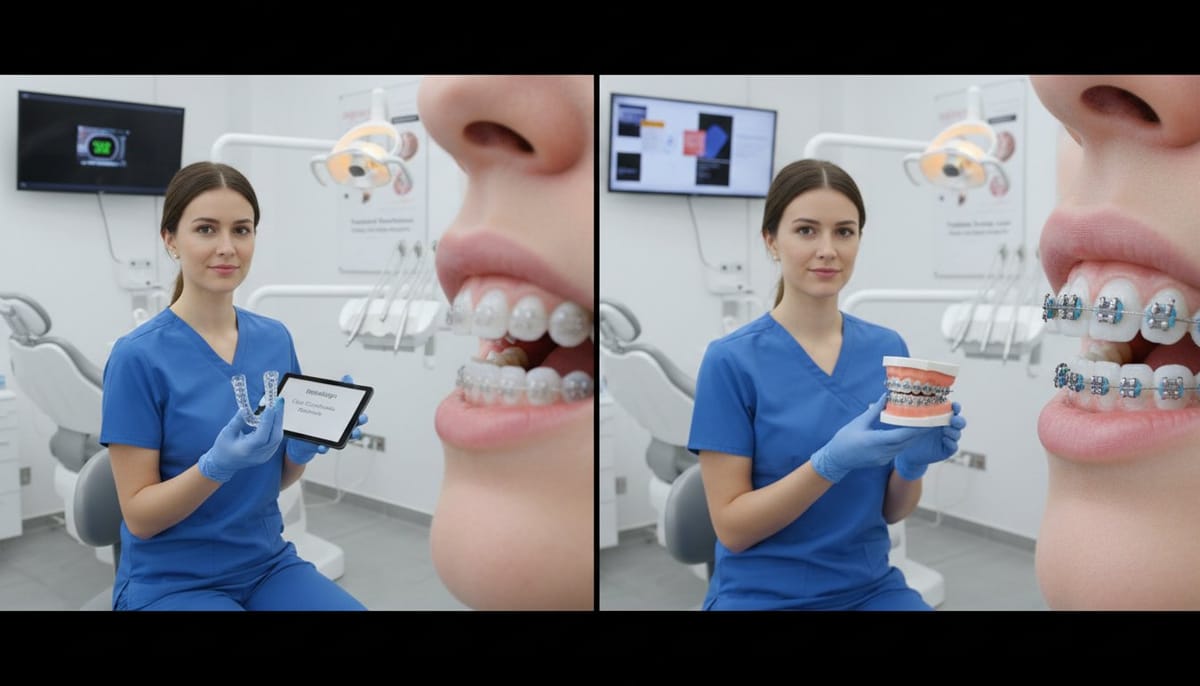
Invisalign vs Traditional Braces: How to Choose?
Invisalign vs Traditional Braces: How to Choose the Best Treatment for You?
Are you considering orthodontic treatment and wondering which option to choose between Invisalign clear aligners and traditional braces? This question is at the heart of many patients' concerns. As a certified Invisalign orthodontic assistant at Dr. David Benguira's Orthodontic Centre, I offer you a comprehensive guide based on the latest scientific studies to help you better understand these two approaches.
What Scientific Studies Say
Recent research published in recognized scientific journals provides us with valuable information on the comparative effectiveness of these two methods:
- Similar success rates: A comparative study shows that approximately 88% of cases treated with Invisalign and 90% of cases treated with conventional braces achieved satisfactory results.
- Variable effectiveness depending on the case: Both approaches are effective in treating malocclusions, but each has distinct strengths and limitations.
The Strengths of Traditional Braces
According to clinical studies, traditional fixed appliances excel in certain specific areas:
- Torque control: Better control of tooth inclination
- Occlusal contacts: Production of more adequate dental contacts
- Transverse expansion: More effective widening of the dental arch
- Retention: Better stability during treatment
- Complex malocclusions: Particularly effective for severe cases requiring significant tooth movements
The Advantages of Invisalign Aligners
Research has also highlighted significant advantages of clear aligners:
- Segmented movements: Excellent for targeted and precise tooth movements
- Gingival health: Significantly better gum health conditions in Invisalign patients
- Patient satisfaction: Generally higher satisfaction rates
- Treatment duration: Can be shorter in certain cases (18 months vs. 24 months according to some studies)
The Limitations of Clear Aligners
It is essential to understand that aligners are not suitable for all cases. Scientific studies identify several contraindications:
Absolute Contraindications:
- Severe malocclusions with dental impactions
- Severe craniofacial skeletal deviations
- Crowding or spacing greater than 5 mm
- Skeletal anteroposterior discrepancies greater than 2 mm
- Severe dental rotations (more than 20 degrees)
- Severe anterior and posterior open bites
- Severely tilted teeth (more than 45 degrees)
- Teeth with very short clinical crowns
- Cases involving multiple missing teeth
Movements Difficult to Achieve with Invisalign:
- Arch expansion through pure translational tooth movement
- Closure of significant extraction spaces
- Major corrections of anteroposterior and vertical discrepancies
- Significant dental extrusion
- Rotation of canines and premolars
Ideal Indications for Invisalign
Studies confirm that clear aligners are particularly effective for:
- Mild to moderate malocclusions
- Adult patients (growth completed)
- Non-extraction cases
- Levelling, tipping, and rotation of teeth (except canines and premolars)
- Patients with excellent compliance (22 hours/day wear time)
Quick Comparison Chart
| Criteria | Invisalign | Traditional Braces |
|---|---|---|
| Aesthetics | Virtually invisible | Visible (ceramic options available) |
| Hygiene | Excellent (removable) | More difficult (fixed) |
| Comfort | Good (no irritating wires) | Possible irritation |
| Diet | No restrictions | Certain foods prohibited |
| Complex cases | Limited | Excellent |
| Compliance required | High (22h/day) | Passive (fixed) |
| Gum health | Superior | Good with rigorous hygiene |
| Emergencies | Rare | More frequent (loose bracket, broken wire) |
The Importance of Compliance with Invisalign
A crucial point highlighted by all studies: Invisalign's success depends heavily on patient discipline. The aligners must be worn 20 to 22 hours per day. Patients with poor compliance or short clinical crowns are not good candidates for this treatment.
Long-Term Stability
Research shows that the Invisalign group has a slightly higher relapse rate (12%) compared to traditional braces (10%), although this difference is not statistically significant. The retention phase therefore remains crucial regardless of the treatment chosen.
Complementary Technologies
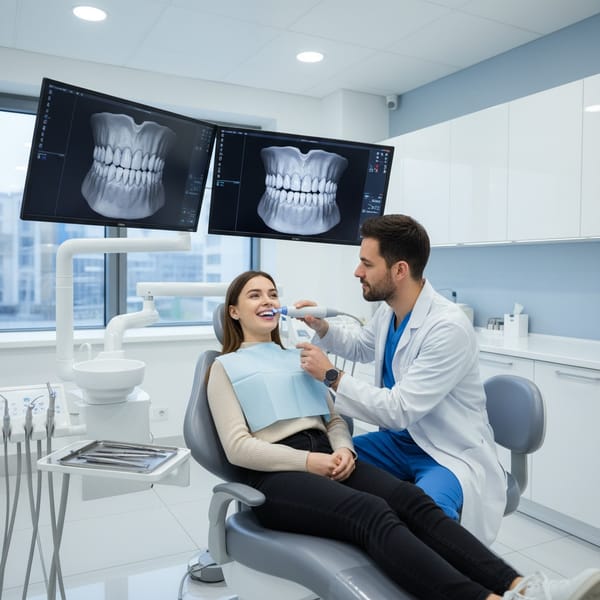
At Dr. David Benguira's Orthodontic Centre, we use state-of-the-art technologies to optimize Invisalign treatments:
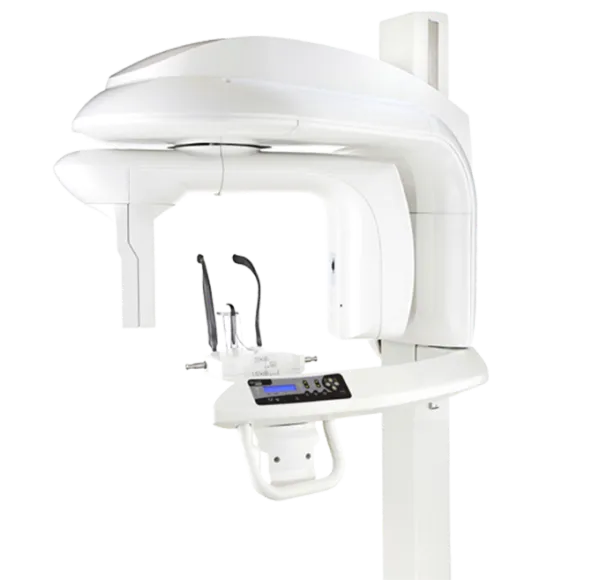
- 3D imaging and CBCT: For precise diagnosis and optimal planning
- Intraoral scanners: Comfortable and precise digital impressions
- Artificial Intelligence: Advanced digital planning (2025 studies)
- Personalized follow-up: Treatment plan adaptation based on progress
So, How Do You Choose?
The answer is not universal — it depends on your specific case. Here are the questions to consider:
- Complexity of your malocclusion: Mild, moderate, or severe?
- Your age: Has growth been completed or is it ongoing?
- Your discipline: Are you able to wear the aligners 22 hours/day?
- Your priorities: Aesthetics, comfort, maximum effectiveness?
- Your lifestyle: Professional requiring aesthetics? Contact sports player?
The Importance of a Personalized Consultation
Important Message
Every smile is unique, and every treatment should be too.
The information presented in this article is based on scientific studies, but it in no way replaces a personalized professional evaluation.
During your free consultation at Dr. David Benguira's Orthodontic Centre, we will:
- Analyze your specific case with 3D imaging
- Discuss in detail the advantages and limitations of each option for YOUR situation
- Present you with a personalized treatment plan
- Answer all your questions
- Help you choose the orthodontic appliance best suited to your needs, goals, and lifestyle
There is no universally "best" treatment — only the best treatment for YOU.
Quality of Scientific Evidence
An important note: the scientific studies on this subject present a moderate level of evidence and a risk of bias ranging from low to high. The clinical and methodological heterogeneity between studies makes a definitive interpretation difficult. This is why the expertise and clinical experience of your orthodontist remain essential in choosing treatment.
Conclusion
Invisalign and traditional braces are both effective, scientifically validated options for correcting malocclusions. Clear aligners represent an excellent alternative for mild to moderate cases in disciplined patients, with advantages in terms of aesthetics, comfort, and gum health. Traditional braces remain superior for complex cases requiring precise biomechanical control.
The key to success? A thorough professional evaluation and a personalized treatment plan.
Next Step
Are you ready to discover which orthodontic option is best for you? Contact Dr. David Benguira's Orthodontic Centre for your free consultation:
- Queen Mary Orthodontic Centre (Montreal): 3766 Queen Mary
- Rive Nord Orthodontic Centre (St-Eustache): 464 rue du Parc, suite 122
- Website: www.monorthodontiste.org
- Virtual consultation also available
Article written by Clara Morgan, Certified Invisalign Orthodontic Assistant
Dr. David Benguira's Orthodontic Centre
Based on scientific studies published in PubMed, BMC Oral Health, and Progress in Orthodontics (2024-2025)
Scientific references:
- Al-Gumaei et al. (2024). Root parallelism after premolar extraction
- Comparative Analysis of Braces and Aligners: Long-Term Outcomes. PMC 2024
- Clinical effectiveness of Invisalign® orthodontic treatment: systematic review. Progress in Orthodontics 2018
- Expert consensus on clinical strategies for clear aligners. International Journal of Oral Science 2025
- Clear Aligner Treatment: Indications, Advantages, and Adverse Effects. Systematic Review 2025