LightForce Braces: How 3D Printing Is Revolutionizing Orthodontics
Imagine braces designed specifically for each of your teeth, with 50-micron precision. Discover LightForce technology, the world's only fully customized, 3D-printed orthodontic bracket system.

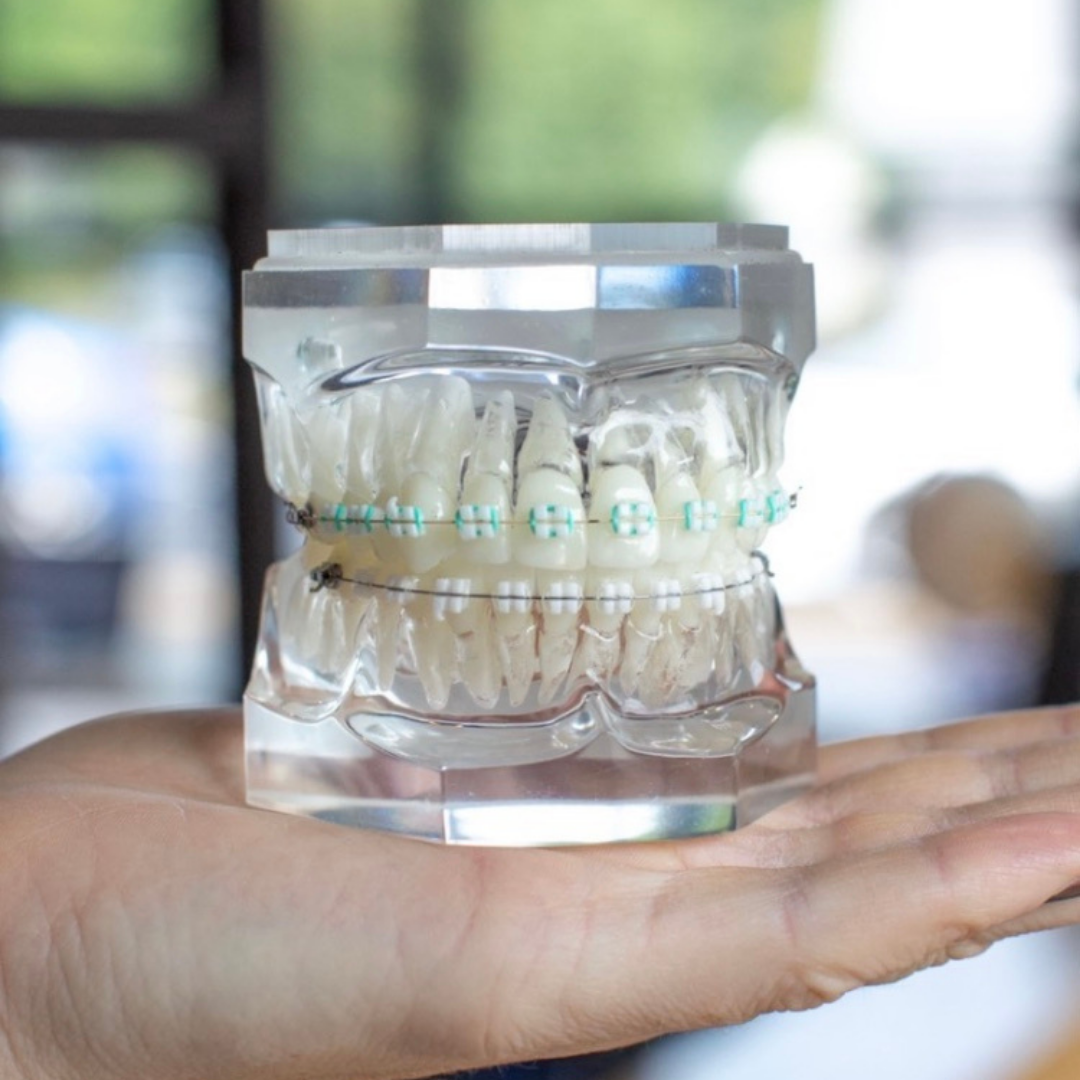
LightForce Braces: How 3D Printing Is Revolutionizing Orthodontics
Imagine braces designed specifically for each of your teeth, with a precision of 50 microns — finer than a human hair. That's exactly what LightForce technology delivers: the world's only fully customized, 3D-printed orthodontic bracket system.
At Centre Orthodontique Rive Nord, we're among the first in Quebec to offer this groundbreaking technology. Here's why it's a game-changer for our patients.
What Exactly Is LightForce?
Unlike traditional braces manufactured in bulk — where the same bracket design is used for every patient regardless of their dental anatomy — each LightForce bracket is individually designed for each tooth in your mouth.
The system relies on three key components:
- LightPlan: an AI-powered 3D treatment planning software that allows me to program the optimal movement of each tooth before treatment even begins.
- Custom brackets: 3D-printed in polycrystalline alumina (medical-grade ceramic), each bracket perfectly matches the unique morphology of each tooth. The orthodontic prescription is built directly into the bracket design.
- LightTray: a custom positioning jig that ensures each bracket is bonded in exactly the right position, eliminating manual placement errors.
How Does the Process Work?
The LightForce journey unfolds in five steps:
Step 1: Digital 3D Scan
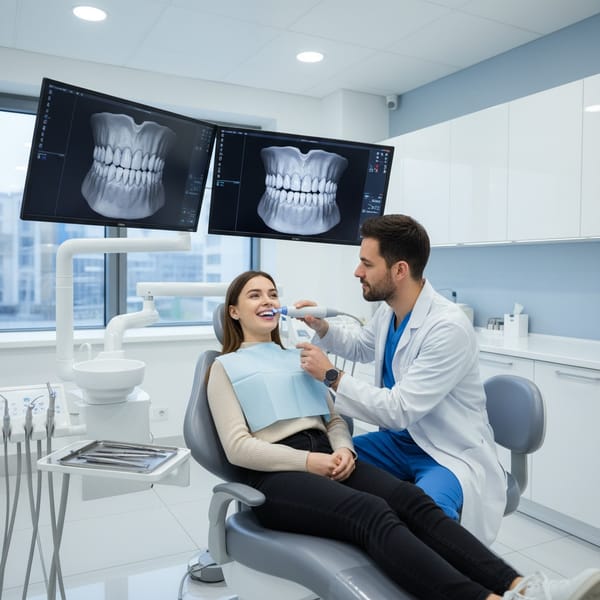
Everything starts with a high-precision intraoral 3D scan. No more uncomfortable traditional impressions — a digital camera captures a complete three-dimensional image of your mouth in just minutes.
Step 2: Treatment Planning with LightPlan
Using the LightPlan software, I analyze your 3D scan and plan the movement of each individual tooth. The software integrates advanced tools: image superimposition, Bolton analysis, occlusal contact visualization, proposed movement animations, and a detailed tooth movement table. You can see your final result before treatment even begins.
Step 3: 3D Printing Your Custom Brackets
Your unique brackets are manufactured in medical-grade ceramic with 50-micron precision. Each bracket is designed for a specific tooth — the base perfectly matches the tooth surface, and the prescription is integrated into the bracket design itself.
Step 4: Bonding with LightTray
The brackets are placed using the LightTray positioning system — a 3D-printed jig made specifically for your mouth. This system eliminates the guesswork of traditional manual bonding. Some clinics report a reduction in bonding time from 90 to 30 minutes with this system.
Step 5: Optimized Treatment
Because every bracket is perfectly positioned from day one, treatment generally requires fewer adjustments and potentially fewer office visits.
Real Benefits for You
1. Total Customization
This is the fundamental difference. With traditional braces, the orthodontist must compensate for bracket imprecision by manually adjusting wires — an iterative process that extends treatment time. With LightForce, the prescription is programmed directly into each bracket. The result: more direct, more efficient tooth movements.
2. Fewer Adjustment Appointments
Since the brackets are designed to move your teeth optimally from day one, adjustments are less frequent. This means less time in the chair and fewer absences from school or work.
3. Improved Comfort
LightForce brackets are made from ceramic, making them smoother and more comfortable than traditional metal brackets. Additionally, the perfectly adapted base for each tooth reduces pressure points and irritation.
4. Aesthetics
The ceramic brackets are translucent and blend naturally with your tooth color. It's a much more discreet option than metal brackets, while still offering the advantages of fixed treatment.
5. Predictability
Thanks to comprehensive 3D planning with LightPlan, the outcome is highly predictable. You know what your smile will look like before you even start.
A Company on the Rise
LightForce Orthodontics was founded in 2015 by Dr. Alfred Griffin, who holds a DMD and PhD from the Medical University of South Carolina and a Master's in Orthodontics from Harvard School of Dental Medicine. After four years of research and development, the first product launched in 2020.
The company's growth speaks to the massive adoption by orthodontists: in 2024, LightForce ranked #47 on the Deloitte Technology Fast 500 — the ranking of the 500 fastest-growing technology companies in North America — with a 2,985% growth rate over three years.
LightForce vs Other Options
LightForce vs Traditional Braces
Traditional braces use mass-manufactured brackets. The orthodontist must compensate for anatomical variations by adjusting wires and sometimes repositioning brackets. LightForce eliminates this variable: each bracket is perfect from the start.
LightForce vs Invisalign
Invisalign uses removable clear aligners, ideal for patients who want discreet treatment. LightForce uses fixed ceramic brackets. Both technologies are complementary:
- LightForce is preferable for complex cases requiring precise 3D movement control, for patients who may not wear aligners consistently, or for younger patients.
- Invisalign is preferable for adult patients prioritizing maximum discretion and the removable aspect.
Who Is LightForce For?
LightForce is suitable for the vast majority of patients who need fixed orthodontic treatment:
- Children and teenagers: ideal because fixed brackets don't depend on patient compliance.
- Adults: the ceramic aesthetics are a major advantage for professionals.
- Complex cases: total customization allows precise control even in the most demanding situations.
What You Should Know
Like any technology, LightForce has some considerations:
- Cost: custom manufacturing and advanced technology mean a slightly higher investment compared to standard traditional braces. We offer financing options to make this technology accessible.
- Relative fragility: ceramic brackets are more discreet but can be slightly more sensitive to impact than metal. A mouthguard is recommended for contact sports.
- Manufacturing time: since each bracket is custom-made, there's a lead time between your initial scan and bracket placement. This time is put to good use for detailed treatment planning.
Our Commitment to Technology
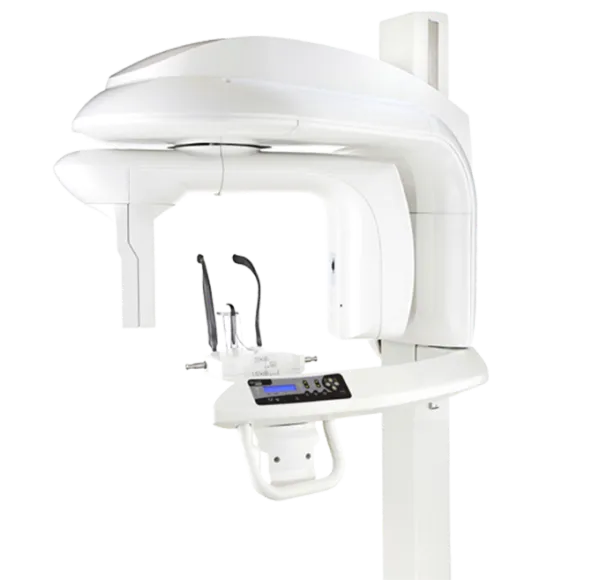
At Centre Orthodontique Rive Nord, we believe every patient deserves treatment designed specifically for them. LightForce fits perfectly with our philosophy of excellence and technological innovation, alongside our intraoral 3D scanner, CBCT imaging, and Invisalign offering.
Curious to know if LightForce is the right option for your smile? Book a free orthodontic consultation. We'll evaluate your situation and present the treatment options best suited to your needs.
Dr. David Benguira, DDS, MSc, FRCD(C)
Orthodontist — Centre Orthodontique Rive Nord, St-Eustache
www.monorthodontiste.org | 450.983.4233