Mouth Sores and Irritations from Braces: 7 Effective Remedies
Discover 7 effective remedies to quickly relieve mouth sores and irritations caused by your orthodontic braces.

Normal irritations at the start of treatment
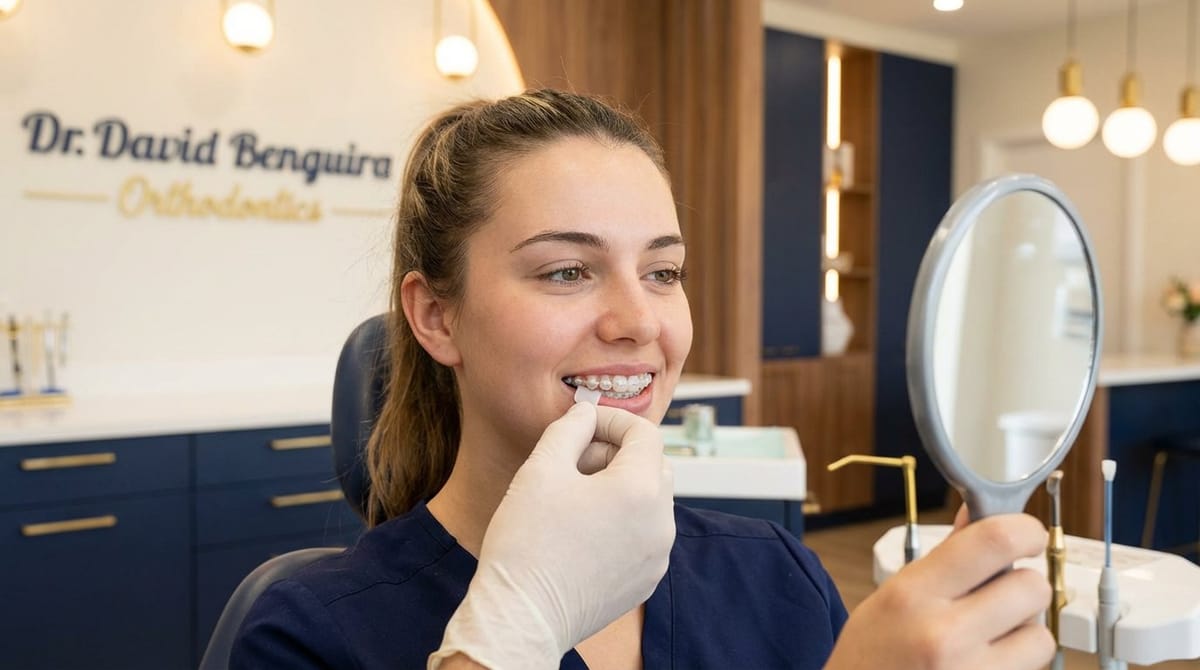
If you've just gotten your braces, rest assured: minor irritations inside your cheeks, lips, or tongue are completely normal during the first few days. Your mouth needs time to adjust to the brackets and wires.
This friction can sometimes cause mouth sores — those small, painful ulcerations that appear on the soft tissues. Fortunately, there are simple and effective solutions to quickly relieve them and prevent their occurrence.
Understanding the difference: irritation vs. mouth sore
It's important to distinguish between two types of lesions:
- Mechanical irritation: redness or sensitivity caused by a bracket or wire rubbing against your mouth. It usually disappears when the source of friction is eliminated.
- Mouth sore (ulcer/canker sore): a small round or oval wound, whitish in the center with a red border. It can be triggered by repeated irritation, stress, or certain acidic foods.
In both cases, the solutions presented below will help you regain your comfort.
7 effective remedies to relieve your irritations
1. Orthodontic wax: your best ally
This is THE number one solution recommended by all orthodontists. This small transparent wax creates a protective barrier between your braces and your soft tissues.
How to use it:
- Dry the irritated area with a tissue
- Take a small ball of wax (pea-sized)
- Roll it between your fingers to soften it
- Apply it directly to the bracket or wire causing the irritation
- Replace it after meals or when it falls off
Clara's tip: At Dr. Benguira's Orthodontic Centre, we provide you with wax as soon as your braces are placed. Don't hesitate to ask us for more if you run out!
2. Saltwater rinse
A natural and affordable remedy with recognized antiseptic properties.
Recipe:
- 1 teaspoon of salt
- 1 cup of warm water
- Mix until completely dissolved
Rinse your mouth for 30 seconds, 2 to 4 times a day. Saltwater reduces inflammation, cleanses the wound, and speeds up healing.
3. Baking soda rinse
Baking soda neutralizes mouth acidity and creates an environment unfavorable to bacteria.
Recipe:
- 1 teaspoon of baking soda
- 1/2 cup of warm water
You can also create a paste (baking soda + a few drops of water) to apply directly to the sore for a few minutes.
4. Soothing gels with hyaluronic acid
Products like Gengigel (available at Jean Coutu, Pharmaprix, Brunet) or Sore Shield form a protective film over the lesion, quickly relieve pain, and promote healing. Available at pharmacies without a prescription.
5. Topical anesthetics
For quick pain relief, benzocaine-based gels (like Orabase or Anbesol) temporarily numb the affected area. Apply them directly to the sore according to the product instructions.
6. The tea bag trick
Black tea contains tannins with natural anti-inflammatory properties. After using a tea bag, let it cool slightly and apply it to the irritated area for a few minutes.
7. Honey and aloe vera
These two natural ingredients have soothing and healing properties. Apply a small amount of pure honey or aloe vera gel directly to the sore, several times a day.
Prevention is better than cure
The best strategy is prevention. Here are our tips to avoid irritations:
- Apply wax preventively on brackets that rub, even before irritation appears
- Maintain excellent oral hygiene — gently brush around brackets with a soft-bristled toothbrush
- Stay well hydrated — saliva has natural antibacterial properties. A dry mouth promotes irritation
- Avoid irritating foods: citrus fruits, tomatoes, vinegar, very spicy or salty dishes, chips and crunchy foods
- Choose soft foods in the first days after an adjustment: yogurt, mashed potatoes, soups, well-cooked pasta
When to contact your orthodontist?
In most cases, mouth sores heal on their own within 1 to 2 weeks. However, contact our team if:
- The pain is intense and doesn't diminish with home remedies
- The sore persists for more than two weeks
- You develop a fever
- You have difficulty eating or drinking
- A wire is poking persistently despite applying wax
An adjustment to your appliance may be necessary to eliminate the source of irritation.
A normal adjustment period
Keep in mind that your mouth will gradually adapt to your braces. Irritations are more common in the first weeks of treatment and after each adjustment. Over time, the tissues of your cheeks and lips will become more resistant.
At Dr. Benguira's Orthodontic Centre, we're here to support you throughout your treatment. Never hesitate to contact us if you have questions or concerns — your comfort is our priority!
Do you have persistent irritations or questions about your treatment? Contact us for a consultation. Our team is here to help!
Clara Morgan
Orthodontic Assistant
Dr. David Benguira Orthodontic Centre