Orthodontic Elastics: Why They Break and How to Replace Them
These small colorful bands play a crucial role in your treatment. Discover everything you need to know about wearing them correctly and handling minor issues.

These small colorful bands play a crucial role in your treatment. Discover everything you need to know about wearing them correctly and handling minor issues.
What are orthodontic elastics for?
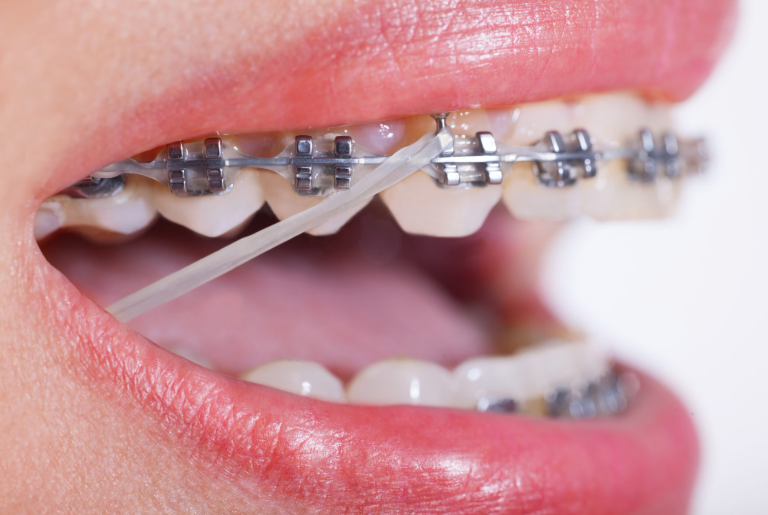
Orthodontic elastics (also called "rubber bands" or "intermaxillary elastics") are small rings made of latex or synthetic material that you hook between your upper and lower braces. Unlike the colorful ligatures that hold the wire to your brackets, these elastics have a very specific mission: creating a force that guides the movement of your jaw and teeth.
They help to:
- Correct the alignment between upper and lower jaw
- Close gaps between teeth
- Adjust your bite (how your teeth meet)
- Speed up specific tooth movements
Without elastics, your treatment could take much longer – sometimes several additional months. That's why it's so important to wear them exactly as prescribed by Dr. Benguira.
Why do elastics break?
If your elastics break frequently, you're not alone! Here are the most common causes:
1. Natural wear
Elastics are designed to exert constant force, but this force decreases over time. That's why they need to be changed at least once a day, ideally after each meal. A worn elastic loses its effectiveness before it even breaks.
2. Poor placement technique
Stretching the elastic too much or twisting it during placement can weaken it. With a little practice, you'll develop the right technique.
3. Jaw movements
Talking, yawning, or chewing puts a lot of strain on elastics. It's normal for them to eventually give way – they're doing their job!
4. Hard or sticky foods
Some foods can snag or prematurely wear out your elastics. Remove them during meals if Dr. Benguira has recommended it.
How to properly replace your elastics
Step 1: Always have spare elastics
Keep a bag of elastics with you at all times – in your bag, at school, at the office. At the Orthodontic Center, we provide you with enough during each visit.
Step 2: Follow the prescribed configuration
Dr. Benguira showed you exactly where to hook your elastics (triangle, square, "Class II," etc.). If in doubt, refer to the diagram we gave you, the photo you took, or call us.
Step 3: Use the right technique
- Wash your hands
- Take a new elastic (never use one that's already been used!)
- Hook it first to the upper hook
- Slightly open your mouth and stretch it to the lower hook
- Make sure it's properly in place
Tip: A small mirror and good lighting make the process much easier!
Frequently asked questions about elastics
Can I remove them to eat?
It depends on Dr. Benguira's instructions. Some patients need to wear them 24/7, others can remove them during meals. Always follow the recommendations you were given.
What if I forget to wear them for a few hours?
Put them back on as soon as possible and continue normally. Don't try to "compensate" by wearing more elastics – that could be counterproductive. Consistency is more important than intensity.
The elastics hurt, is that normal?
Slight sensitivity in the first few days is normal, especially when you're starting or when the configuration changes. If the pain persists for more than a few days or is intense, contact us.
I've run out of elastics, what should I do?
Call the Orthodontic Center! We can provide more quickly. Never use regular rubber bands (like hair elastics) – they don't have the right force and could damage your teeth or gums.
The importance of consistency
Here's what many patients don't realize: wearing your elastics 50% of the time doesn't give you 50% of the results. In reality, treatment can completely stall if elastics aren't worn regularly.
Think of it like weight training: it's consistent repetition that produces results, not occasional intense effort.
Did you know?
Patients who wear their elastics rigorously often finish their treatment several months earlier than expected. It's one of the factors you have the most control over!
In summary
Orthodontic elastics are small allies that make a big difference in your treatment. They naturally break with use – that's expected! The important thing is to:
- Always have spare elastics with you
- Change them several times a day
- Follow the prescribed configuration
- Wear them for the recommended number of hours
- Contact us if you have questions
At Dr. David Benguira's Orthodontic Center, we're here to support you every step of the way. Never hesitate to call us if you have questions about your elastics or any other aspect of your treatment.
"We don't just give you back your smile. We do everything possible to make your treatment experience enjoyable and fun."
Need elastics or advice?
📍 Queen Mary Orthodontic Center: 3766 Queen Mary, Montreal
📍 North Shore Orthodontic Center: 464 du Parc Street, suite 122, St-Eustache
📞 Call us with any questions
🌐 www.monorthodontiste.org