Orthodontic Mini-Screws (TADs): The Innovation That Avoids Surgery
Do you have a complex orthodontic case? Have you been told about jaw surgery? Orthodontic mini-screws (TADs) allow tooth movements that were once impossible – without major surgery.

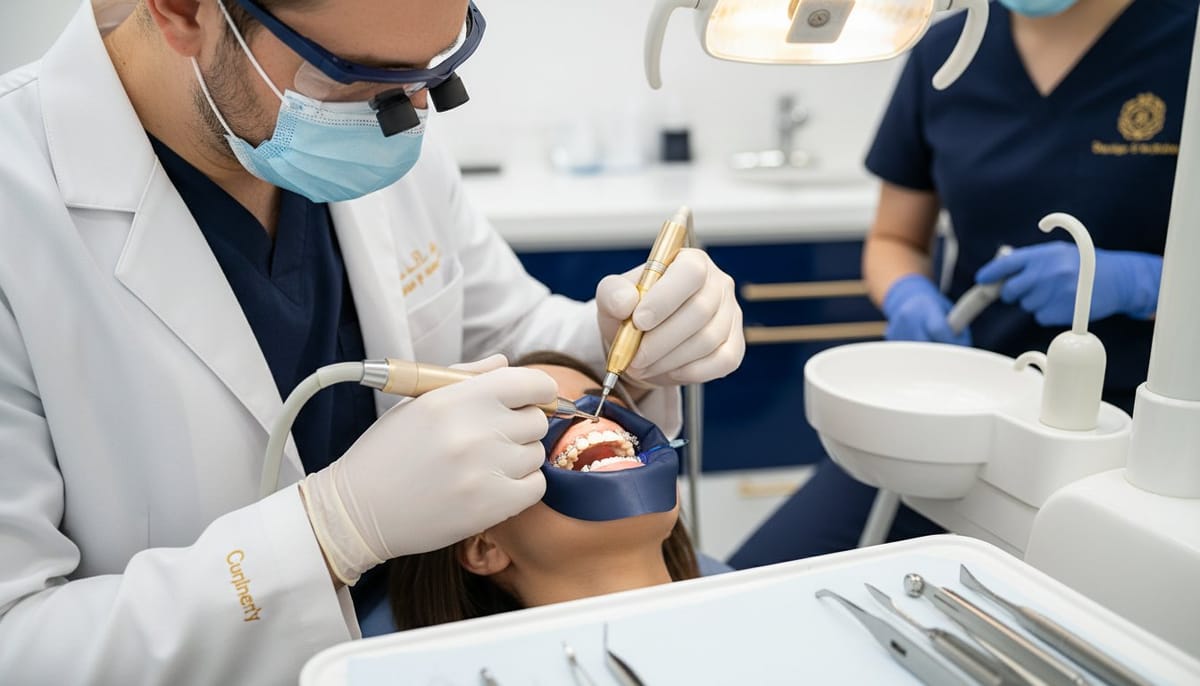
What is an orthodontic mini-screw (TAD)?
TADs (Temporary Anchorage Devices), also called orthodontic mini-screws, are tiny titanium screws (about 6-12 mm long and 1.2-2 mm in diameter) temporarily placed in the jawbone. They serve as a fixed anchor point to move teeth precisely and controlled.
Why "temporary"?
Unlike dental implants which are permanent, orthodontic mini-screws are:
- Placed only for the duration of treatment
- Easily removed once their mission is accomplished
- Leave no trace after removal
The revolutionary concept: absolute anchorage
The traditional orthodontic challenge
In classic orthodontics, to move a tooth, you must rely on other teeth. It's Newton's 3rd law: action = reaction. The problem? The anchor teeth move too!
Example: To move front teeth back, you pull on the molars. But the molars move forward a bit too – which limits the possible movement.
The mini-screw solution
Mini-screws are anchored in bone, not in teeth. They offer absolute anchorage that doesn't move. Result? You can:
- Move teeth exactly where you want
- Achieve large-amplitude movements
- Avoid unwanted side effects on other teeth
What cases can mini-screws treat?
1. Anterior open bites
The problem: Front teeth don't touch when you close your mouth.
Traditional solution: Often jaw surgery.
With mini-screws: We can "intrusion" (push down) the back molars, which tips the jaw and closes the open bite – without surgery.
2. Facial and dental asymmetries
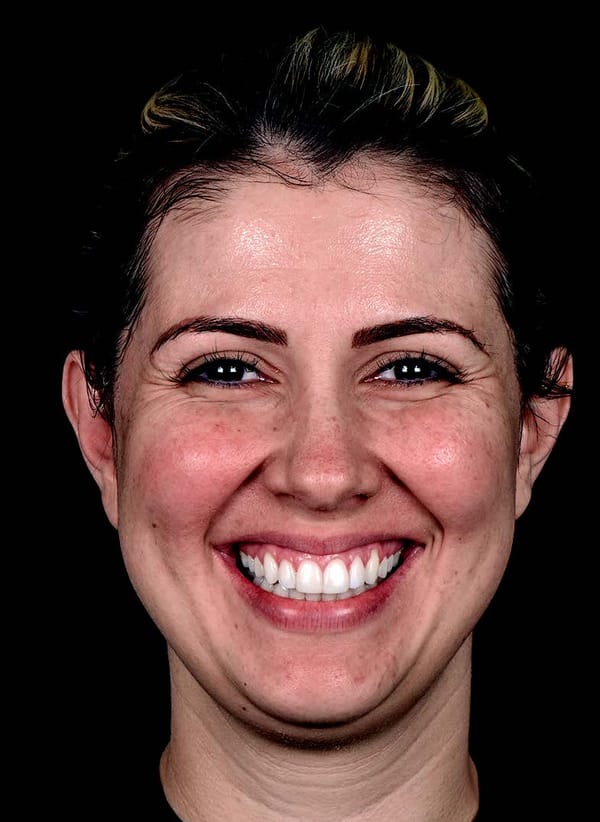
The problem: The dental midline doesn't match the facial midline, or the smile line is tilted.
With mini-screws: We can correct the "cant" (tilt) of the occlusal plane and precisely reposition teeth relative to the face.
3. Molar distalization
The problem: Molars are too far forward and create crowding.
With mini-screws: We can move all back teeth on one or both sides backward, creating space without extracting teeth.
4. Complex adult cases
For adults who don't want or can't undergo jaw surgery, mini-screws often offer a viable alternative to achieve excellent results.
The placement: a simple and quick procedure
Does it hurt?
Rest assured: placing a mini-screw is a minor procedure that typically takes less than 15 minutes.
- Local anesthesia only (like for a filling)
- No incision – the screw simply passes through the gum
- Minimal discomfort – comparable to a braces adjustment
- No time off work needed
3D-guided placement
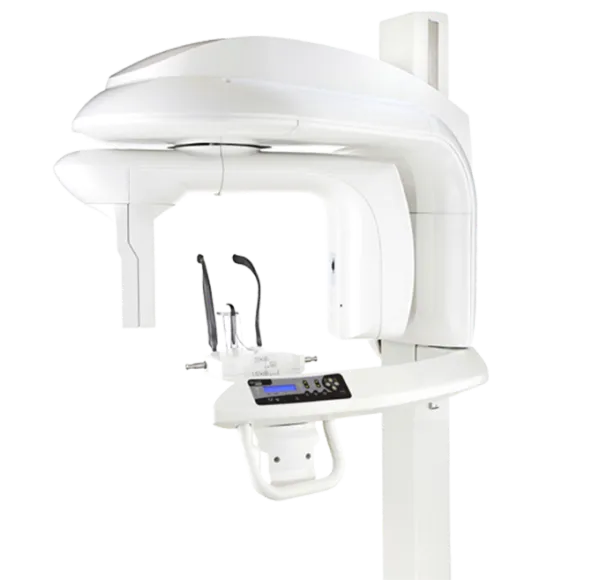
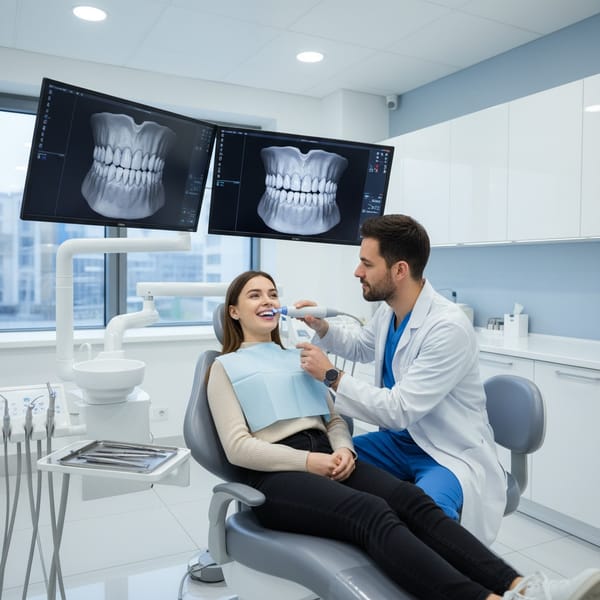
At Dr. Benguira's Orthodontic Centre, we use 3D imaging technology (CBCT) combined with digital models to:
- Virtually plan the optimal placement of each mini-screw
- Create personalized 3D-printed surgical guides
- Ensure millimeter precision
- Avoid sensitive anatomical structures (roots, nerves, sinuses)
During treatment
How does it work daily?
Once the mini-screw is in place:
- It's connected to your braces or aligners by elastics or springs
- It works 24/7 silently
- You barely feel it after the first few days
- Hygiene is simple: normal brushing around the screw
Duration of use
Mini-screws stay in place:
- From a few months to 1-2 years depending on the required movement
- Until the treatment goal is achieved
- They're removed without anesthesia in seconds
Mini-screw advantages
Compared to jaw surgery
| Aspect | Orthognathic Surgery | Mini-screws (TADs) |
|---|---|---|
| Hospitalization | 1-2 days | None |
| Anesthesia | General | Local |
| Recovery | 4-6 weeks | A few days |
| Risks | Higher | Minimal |
| Cost | Higher | Included in treatment |
Other advantages
- Reversible: can be repositioned if needed
- Well-tolerated: success rate over 85%
- Versatile: usable with braces or aligners
- Precise: millimeter-controlled movements
Am I a good candidate?
Mini-screws are particularly indicated if you have:
- An anterior open bite
- A dental or facial asymmetry
- A need to significantly retract teeth
- A complex case usually treated with surgery
- Contraindications to general surgery
- A preference for a less invasive approach
Limitations
Mini-screws can't do everything. In some cases of major skeletal discrepancies, surgery remains the best option. A complete evaluation determines the best approach for your situation.
In summary
Orthodontic mini-screws (TADs) represent a major advancement that allows:
- Achieving tooth movements that were once impossible
- Avoiding jaw surgery in many cases
- Offering a less invasive and more predictable solution
- Effectively treating complex cases
This technology, combined with 3D planning, offers remarkable precision and results.
Do you have a complex orthodontic case? A consultation will evaluate whether orthodontic mini-screws can help you achieve your goals without surgery. Dr. David Benguira's Orthodontic Centre offers a free consultation to discuss your situation.
📞 Queen Mary Orthodontic Centre – Montreal | Rive Nord Orthodontic Centre – St-Eustache
🌐 www.monorthodontiste.org