Pacifiers and Jaw Development: What Every Parent Should Know
Complete guide for parents: how pacifiers influence your child's oral development and when to consult an orthodontist.

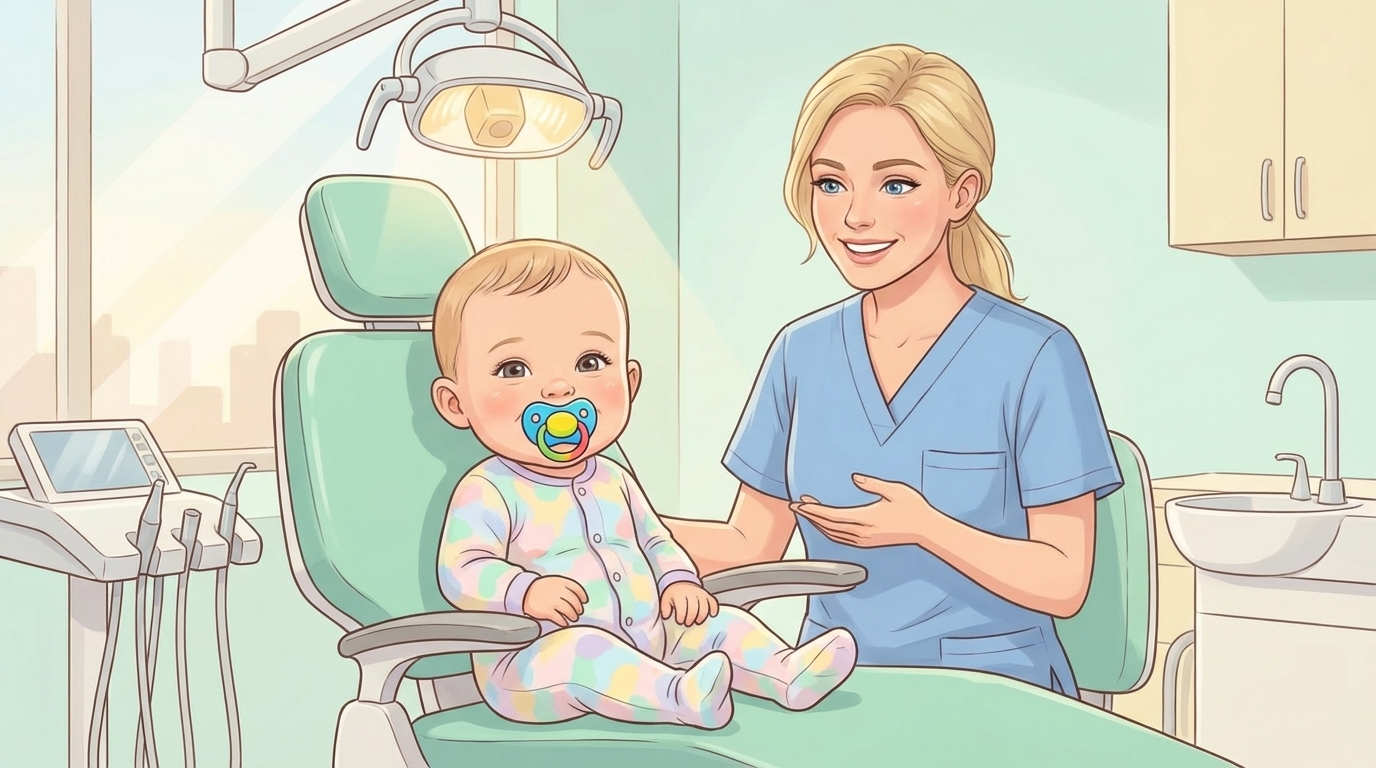
Does your baby use a pacifier? Are you wondering if it will affect the development of their teeth and jaw? These are among the most common questions we receive from parents at the Orthodontic Centre. The good news: with the right information and a few simple precautions, the pacifier can remain a valuable comfort tool without compromising your child's oral health.
How does a pacifier influence oral development?
Your baby's mouth is in full development during the first years of life. The palate, jaw, and tooth alignment are particularly malleable during this period. When a child uses a pacifier for an extended time, the pressure on the palate and teeth can influence their development.
Recent research, including a systematic review published in Dentistry Journal in 2025, shows that prolonged pacifier use (beyond 3 years) is associated with an increased risk of:
- Anterior open bite: a gap between the upper and lower teeth when the mouth is closed
- Posterior crossbite: a narrowing of the palate affecting molar alignment
- Excessive overjet: upper teeth protruding too far forward relative to the lower teeth
Orthodontic pacifier vs regular pacifier: what does science say?
The concept of the "orthodontic" pacifier appeared in the 1980s. These models feature a flattened nipple on the tongue side and angled on the palate side, designed to match the natural anatomy of the mouth.
Potential benefits:
- Reduced pressure on the developing palate
- Encouragement of physiological tongue positioning
- Imitation of the maternal nipple shape
What the studies say: A review of scientific literature indicates that physiological pacifiers may reduce the occurrence of anterior open bite compared to conventional models. However, researchers emphasize that no pacifier completely eliminates risks if use continues beyond the recommended age.
Orthodontist recommendations
The American Academy of Pediatric Dentistry and international orthodontic associations agree on several key points:
| Age | Recommendation |
|---|---|
| 0-12 months | Free use - sucking is a natural and beneficial reflex |
| 12-24 months | Begin gradually reducing use |
| 18 months | Ideal time to limit use (canine emergence) |
| Before 3 years | Goal: complete stop before permanent teeth erupt |
Good news: If your child stops using the pacifier before age 3, baby teeth positions typically normalize on their own, and permanent teeth are not affected.
Pacifier vs thumb: which to choose?
Orthodontists are unanimous: the pacifier is preferable to thumb sucking. Why?
- The nipple shape is more physiological than the thumb
- Weaning is much easier (you can "lose" a pacifier, not a thumb!)
- The intensity of sucking is generally lower
Our practical tips for parents
- Choose a quality pacifier - Opt for physiological/orthodontic models with a flattened, symmetrical nipple
- Gradually limit use - Reserve the pacifier for sleep times or moments of high emotional stress
- Avoid keeping the pacifier attached at all times - Constant access encourages excessive use
- Plan the weaning - Create a positive ritual ("pacifier fairy", farewell gift)
- Consult by age 7 - An early orthodontic evaluation can detect and correct any problem before it becomes complex
When to consult an orthodontist?
Even if your child has used a pacifier beyond the recommended age, it's never too late to take action. At Dr. David Benguira's Orthodontic Centre, we recommend a first evaluation at age 7. This consultation allows us to:
- Assess palate and jaw development
- Identify early signs of malocclusion
- Propose interceptive orthodontics if necessary
- Reassure parents about their child's development
Do you have questions about your child's oral development? Book a free, no-obligation consultation at one of our clinics:
• Montreal (Queen Mary): (514) 484-3718
• St-Eustache (North Shore): (450) 983-4233