The Evolution of Teeth: From Baby to Adulthood
Learn about dental development stages from infancy to adulthood and when to schedule your child's first orthodontic evaluation.

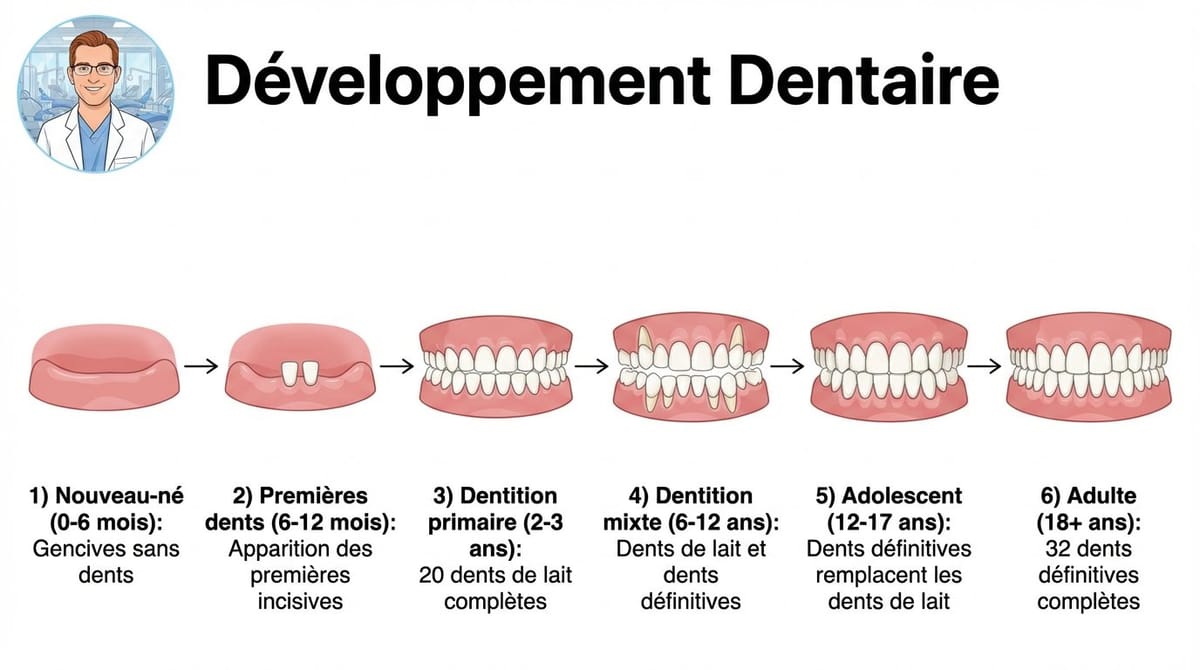
Understanding how teeth develop from infancy to adulthood helps parents know what to expect and when to seek orthodontic evaluation.
Baby Teeth (Primary Dentition)
Timeline
- 6-10 months: First teeth emerge (usually lower central incisors)
- 12-18 months: First molars appear
- 16-22 months: Canines emerge
- 2-3 years: Complete set of 20 baby teeth
Important Role
Baby teeth:
- Hold space for permanent teeth
- Guide jaw development
- Enable proper nutrition
- Support speech development
Mixed Dentition (Ages 6-12)
This transition period is crucial for orthodontic evaluation:
- Age 6: First permanent molars appear behind baby teeth
- Ages 6-8: Lower and upper front teeth replaced
- Ages 9-12: Remaining teeth gradually replaced
- Ages 11-13: Second molars emerge
Permanent Dentition
Adults have 28-32 teeth:
- 8 incisors (front teeth)
- 4 canines
- 8 premolars
- 8-12 molars (including wisdom teeth)
When to Consult an Orthodontist
The American Association of Orthodontists recommends:
- First evaluation at age 7
- When permanent teeth begin appearing
- If baby teeth are lost very early or late
- If there are spacing or crowding concerns
Common Developmental Issues
- Early tooth loss: Can cause shifting
- Delayed eruption: May indicate impaction
- Crowding: Often visible by age 7
- Crossbite: Should be treated early
Why Early Evaluation Matters
At age 7, an orthodontist can:
- Predict future development
- Identify problems early
- Plan interceptive treatment if needed
- Avoid more complex treatment later
Conclusion
Understanding dental development empowers parents to make informed decisions. At Dr. Benguira's Orthodontic Center, we offer free consultations to evaluate your child's dental development at the optimal time.