Sleep Apnea and Orthodontics: When Your Smile Improves Your Sleep
How the jaws and bite affect sleep apnea, and how orthodontic treatment, including mandibular advancement devices, can help in coordination with your physician.

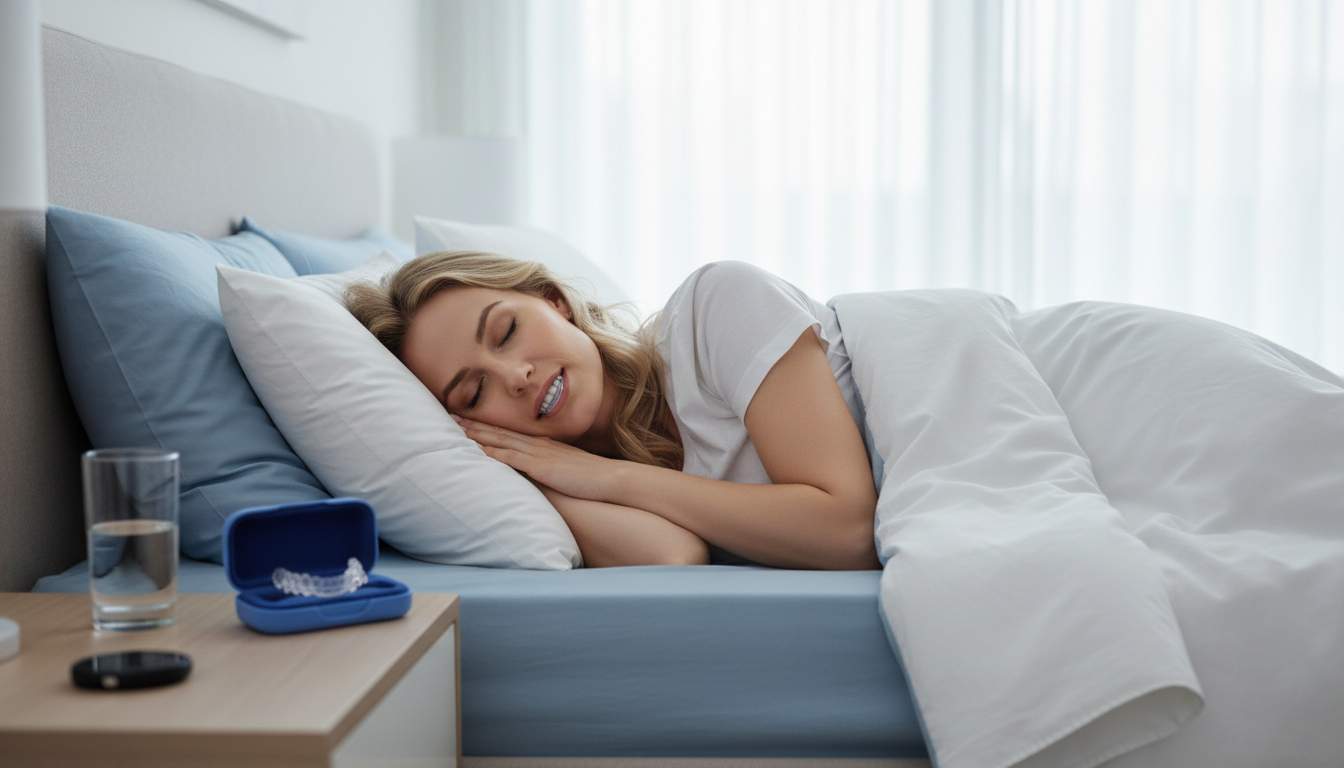
Do you snore loudly? Wake up tired even after a full night's sleep? Obstructive sleep apnea could be the cause, and your orthodontist can be part of the solution.
Sleep apnea: an underestimated health problem
Obstructive sleep apnea (OSA) is a night-time breathing disorder that affects about 5% of the general population in Quebec. Yet up to 90% of cases go undiagnosed and untreated. Many people with sleep apnea don't even know they have it.
What is obstructive sleep apnea?
OSA is defined by repeated pauses in breathing during sleep, caused by a partial or complete blockage of the upper airway. During these episodes, which can last from 10 seconds to more than a minute, the brain and body are deprived of oxygen.
Common symptoms of sleep apnea
- Loud, frequent snoring (often reported by a bed partner)
- Pauses in breathing observed during sleep
- Waking suddenly with a choking or gasping feeling
- Chronic fatigue and daytime sleepiness despite what seems like enough sleep
- Morning headaches
- Trouble concentrating and memory problems
- Irritability and mood changes
- Dry mouth or sore throat on waking
- High blood pressure
- Unexplained weight gain
Sleep apnea isn't just a night-time nuisance. Left untreated, it significantly increases the risk of heart disease, stroke, type 2 diabetes, and accidents (due to daytime sleepiness).
The link between your jaw and your sleep
Here's something many people don't know: the structure of your jaws and the alignment of your teeth can contribute directly to sleep apnea. That's where orthodontics comes in.
How bite problems can contribute to sleep apnea
Some orthodontic problems reduce the space available for the airway and make night-time obstruction more likely:
A narrow upper jaw (maxilla)
An upper arch that is too narrow reduces the volume of the nasal passages and encourages mouth breathing. It also leaves less room for the tongue, which tends to fall back toward the throat during sleep and block the airway.
A retruded lower jaw (mandibular retrognathia)
A lower jaw positioned too far back (a Class II bite) considerably reduces the space in the throat. The tongue, which is attached to the lower jaw, also sits further back, increasing the risk of airway obstruction during sleep.
Other anatomical factors
- Micrognathia: an unusually small lower jaw
- Macroglossia: a large tongue relative to the space in the mouth
- A deep, high-vaulted palate
- Enlarged tonsils combined with limited space
These anatomical conditions can be present from birth or develop gradually because of habits such as chronic mouth breathing, prolonged thumb sucking or an atypical swallowing pattern.
How orthodontics can help with sleep apnea
Sleep apnea is diagnosed by a physician, and its treatment is decided with the physician. Orthodontics plays an important role, especially when anatomical factors are involved.
At Dr. David Benguira's Orthodontic Centre, we offer several orthodontic approaches to treat or improve sleep apnea, in coordination with your physician.
1. Mandibular advancement device (MAD)
A mandibular advancement device (MAD) is a removable oral appliance, custom-made by an orthodontist trained in dental sleep care. It is one of the most widely used options for mild to moderate obstructive sleep apnea.
How does a MAD work?
The appliance holds your lower jaw slightly forward during sleep, usually by a few millimetres. This produces several helpful effects:
- Opens the upper airway by moving the tongue forward
- Increases tension in the genioglossus (the main muscle of the tongue), keeping it from falling back
- Widens the space in the throat, making it easier for air to pass
- Reduces the soft tissue vibration that causes snoring
Clinical effectiveness
Studies show that a mandibular advancement device can reduce the number of apneas by about 50% on average. To be fully effective, the advancement usually corresponds to about 70% of the patient's maximum forward jaw movement.
Adherence is an important factor: about 75% of patients are still using their appliance after one year, which compares favourably with CPAP (continuous positive airway pressure).
Who is a MAD recommended for?
A mandibular advancement device is particularly indicated for:
- Patients with mild to moderate obstructive sleep apnea
- Patients who can't tolerate CPAP or decline it
- Patients for whom CPAP isn't working well or who struggle to use it
- Chronic snorers without diagnosed apnea
- People who need a portable option for travel
The process at our clinic
- A complete initial assessment: your medical history, a clinical exam of your bite, jaws and airway
- Precise digital impressions: our 3D intraoral scanner creates an exact model of your teeth and jaws
- Custom fabrication: the appliance is tailored to your anatomy and needs
- Gradual adjustment: at fitting, Dr. Benguira determines the right advancement and adjusts it step by step
- Regular follow-up: check-up visits to assess effectiveness and comfort, with adjustments as needed, in coordination with your physician
Side effects and how they're managed
A MAD is generally well tolerated. Minor side effects can occur at first:
- Extra saliva or a dry mouth (temporary)
- Mild tooth or gum sensitivity
- Jaw muscle tightness in the morning (eases with use)
- Minor changes in the bite (monitored by Dr. Benguira)
These effects are usually temporary and rarely significant enough to stop treatment. Regular follow-up keeps them in check.
2. Rapid maxillary expansion (RME)
Particularly effective in growing children and teens, rapid palatal expansion widens the upper jaw (the palate) with a fixed orthodontic appliance.
Breathing benefits
- Increases the volume of the nasal passages, which can improve nasal breathing
- Creates more room for the tongue, reducing how far it falls back
- Has been shown in research to improve night-time oxygen levels and reduce the apnea-hypopnea index in some treated children
- May help prevent obstructive sleep-disordered breathing later on
In children, tonsils and adenoids are often involved too, so the physician and ENT assessment always comes first. Read more in our article on snoring, tonsils and orthodontics in children.
3. Functional orthodontic treatment (growth-guiding appliances)
In children and teens with a Class II bite (a lower jaw that sits back), functional orthopedic appliances encourage lower jaw growth and improve jaw position.
Types of functional appliances
- Growth activator: encourages forward lower jaw growth
- Twin Block: a removable appliance
- Herbst: a fixed appliance for lower jaw advancement
- Bionator: encourages balanced growth
Benefits for sleep
In growing patients, functional appliance treatment can:
- Increase the volume of the airway in the throat
- Improve airflow
- Reduce the risk of developing OSA in adulthood
- Correct the bite and improve breathing at the same time
Functional orthodontics has a preventive role: treating bite problems in childhood can help prevent sleep-disordered breathing later in life.
4. Comprehensive orthodontics (braces, Invisalign and clear aligners, lingual orthodontics)
Comprehensive orthodontic treatment to correct a bite problem can also have a positive effect on the airway.
How aligning the teeth can help breathing
- Correcting the bite: improves how the jaws sit relative to each other
- Widening the arches: creates more room for the tongue
- Better tongue position: once the teeth are aligned, the tongue can rest in its natural position
- Better posture: improved head and neck position
Depending on your situation and preferences, we offer:
- Traditional braces (metal or ceramic)
- Invisalign and other clear aligners, popular with adults
- Lingual orthodontics (braces placed behind the teeth)
MAD vs CPAP: what's the difference?
CPAP (continuous positive airway pressure) remains the reference treatment for moderate to severe obstructive sleep apnea. When the indication is properly established (a medical diagnosis, the severity of the apnea, and follow-up with your physician), a mandibular advancement device can replace CPAP. It is not a general rule: the choice is always made case by case, with your physician.
| Criterion | CPAP | Mandibular advancement device (MAD) |
|---|---|---|
| Effectiveness | Very high (70 to 90% fewer apneas) | Moderate to high (about 50% fewer on average) |
| Comfort | Mask, hose and machine, often hard to tolerate | A simple oral appliance, no mask or machine |
| Use after 1 year | 40 to 60% (many stop) | About 75% |
| Portability | Bulky, needs electricity | Compact, easy to travel with |
| Effect on your partner | Machine noise | Discreet and silent |
| Indications | Moderate to severe apnea (reference treatment) | Mild to moderate apnea, or when CPAP isn't tolerated, once the indication is established with your physician |
| Maintenance | Daily cleaning of mask and hose, machine upkeep | Simple daily cleaning of the appliance |
Important: a MAD and CPAP aren't necessarily in competition. In some cases they can be complementary or used alternately (for travel, nights at home, and so on), as agreed with your physician.
Why a professional diagnosis matters
If you think you may have sleep apnea, it's important to follow the right diagnostic path:
Step 1: See a physician
Start with your family doctor or a sleep medicine specialist, who can:
- Assess your symptoms and risk factors
- Order a sleep study (polysomnography) to confirm the diagnosis
- Determine how severe your apnea is (mild, moderate or severe)
- Recommend the appropriate treatment or treatments
Step 2: Orthodontic consultation
Once sleep apnea has been diagnosed, see Dr. David Benguira for:
- A complete orthodontic assessment of your bite and jaw structures
- Identification of contributing anatomical factors (a retruded jaw, a narrow palate, and so on)
- A discussion of the orthodontic treatment options suited to your situation
- A custom mandibular advancement device if indicated
- A treatment plan coordinated with your sleep physician
Important: buying a mandibular advancement device without a medical prescription or an orthodontic consultation (online, for example) is strongly discouraged. Generic devices can be ineffective, uncomfortable, or even damage the teeth or jaw joints.
Our approach to sleep apnea
Orthodontic expertise in dental sleep care
Dr. David Benguira is a certified orthodontic specialist (FRCD(C)) with particular experience treating sleep-disordered breathing related to the jaws and bite. He has been an active member of the CHU Sainte-Justine medical staff.
Modern technology
- 3D imaging (CBCT): a precise look at your airway and jaw structures
- Digital intraoral scanner: precise, comfortable digital impressions to make your custom appliance
- Cephalometric analysis: an assessment of how the jaws relate to the airway
A team approach
We work closely with your other health professionals (sleep physician, ENT, physiotherapist) so your care is coordinated.
Custom-made appliances
Our mandibular advancement devices are:
- Tailored to your anatomy with 3D digital impressions
- Adjustable step by step for effectiveness and comfort
- Made from biocompatible materials
- Designed for comfortable long-term night-time wear
Regular, personalized follow-up
Your treatment doesn't stop once the appliance is fitted. We provide careful follow-up to:
- Assess how well the treatment is working
- Adjust the appliance as needed
- Watch for possible side effects
- Check the health of your teeth and jaw joints
Frequently asked questions
Does insurance cover a mandibular advancement device?
Many private insurance plans cover part or all of a mandibular advancement device prescribed for medically diagnosed sleep apnea. Our team can help you check your coverage and submit the necessary claims.
How long does it take to get used to the appliance?
Most patients adjust to their appliance within a few days to 2 weeks. Slight discomfort or extra saliva at first is normal and passes quickly. Gradual adjustments make the transition much easier.
Is the appliance uncomfortable?
A well-fitted, custom appliance should be fairly comfortable. Some patients feel slight jaw tightness in the morning at first, which eases with use. If discomfort persists, we'll adjust the appliance.
How long does a mandibular advancement device last?
With proper care, a good-quality appliance generally lasts 3 to 5 years. Normal wear, dental changes or new needs may call for a replacement.
Can I travel with my appliance?
Yes, and that's one of the practical advantages of a MAD over CPAP. The appliance is compact, needs no electricity and fits easily in its case.
Does the appliance work right away?
A mandibular advancement device acts from the first night, unlike orthodontic treatment, which takes months. Its effectiveness is then confirmed with your physician, often with a follow-up sleep study.
Are there long-term risks or side effects?
Long-term studies show that a MAD is generally safe. Minor changes in the bite can occur over the years, which is why regular orthodontic follow-up matters. Dr. Benguira monitors this closely at your check-ups.
Can I combine the appliance with other treatments?
Yes, in some cases a MAD can be combined with other approaches: weight loss, positional changes, upper airway exercises, or alternating with CPAP as agreed with your physician.
My child snores a lot. Is it serious?
Persistent snoring in a child is not normal and can point to sleep-disordered breathing (1 to 6% of children are affected). Start with your physician. An early orthodontic assessment can also identify problems such as a narrow palate or a retruded jaw, which are treatable.
Don't let sleep apnea run your life
If you have loud snoring, chronic fatigue or diagnosed sleep apnea, there are effective options. Working with your physician, orthodontics can help improve your sleep and, with it, your quality of life.
Book a consultation
Queen Mary Orthodontic Centre (Montreal)
3766 Queen Mary, Montreal
Phone: (514) 484-3718
Email: orthodrbenguira@gmail.com
Rive Nord Orthodontic Centre (St-Eustache)
464 rue du Parc, suite 122, St-Eustache
Phone: (450) 983-4233
By appointment
Learn more on our sleep apnea page and our page on sleep problems in children.
This article is for educational purposes only. Sleep apnea is a serious medical condition that requires diagnosis and follow-up by qualified health professionals. Always consult your physician and your orthodontist for a personalized treatment plan.
References: This article draws on the Ordre des dentistes du Québec guidelines on obstructive sleep apnea and treatment with mandibular advancement devices (2019), as well as recent research in orthodontics and sleep medicine published in 2025.