Snoring, Tonsils and Orthodontics: The Link in Children
Does your child snore and sleep with their mouth open? Tonsils, a narrow palate, mouth breathing: how the physician, the ENT and the orthodontist work together.


A child who snores often, sleeps with their mouth open and wakes up tired deserves a closer look. Tonsils and adenoids are often involved, and that's first a matter for the physician and the ENT specialist. The orthodontist also has a role when the palate is narrow.
Snoring is often thought of as an adult problem. Yet about one child in ten snores regularly. Most of the time it isn't serious. But in some of these children, snoring comes with real pauses in breathing during the night, called sleep apnea. And it shows during the day.
Signs to notice
At night:
- snoring several nights a week;
- pauses, gasping, very restless sleep;
- mouth open, head often tilted back;
- bedwetting coming back in a child who was already dry.
During the day:
- tired on waking, dark circles under the eyes;
- irritability, trouble paying attention, sometimes hyperactivity rather than sleepiness;
- breathing through the mouth, even when awake.
None of these signs is a diagnosis on its own. But if several of them sound familiar, talk to your physician.
Why tonsils matter so much
Between ages 3 and 7, the tonsils and adenoids (the "third tonsil," behind the nose) are naturally larger. In some children they take up so much room that they block the airflow, and the child compensates by breathing through the mouth. An ENT specialist evaluates this, often with a sleep study when apnea is suspected. When they really are the cause, removing them is often the main treatment.
The link with the teeth and the jaw
When a child breathes through the mouth for years, the tongue rests low instead of sitting against the palate. Yet the tongue is part of what shapes the upper jaw during growth. A common result: a high, narrow palate, a crossbite, a face that lengthens slightly, and teeth that run short of room.
And it works both ways. A narrow palate goes hand in hand with narrower nasal passages, which makes breathing through the nose harder.
What the orthodontist can do
When the upper jaw is narrow, an expander widens it while the child is still growing. That corrects the bite and makes room for the teeth. In some children, expansion also helps them breathe better through the nose. We stay cautious on this point: the effect varies from one child to another, and expansion never replaces an ENT evaluation when the tonsils or adenoids are involved.
Often we do both. A child who has had their tonsils and adenoids removed can then start a first phase of orthodontics to widen the palate. The two treatments complement each other.
A team effort
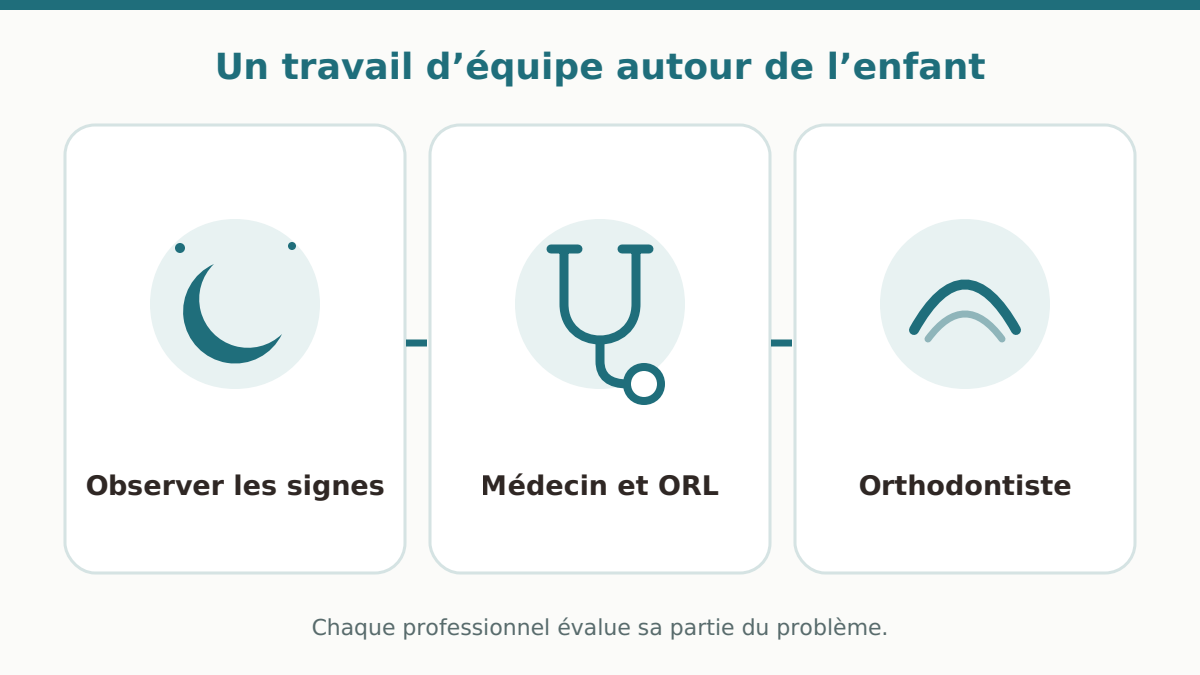
The pediatrician or family doctor does the first screening. The ENT takes care of the airway. The dentist often notices the first signs in the mouth. And the orthodontist looks after jaw growth. When we talk to each other, the child benefits.
If we notice signs of mouth breathing or snoring at the clinic, we'll suggest you mention it to your physician. And if your physician or ENT refers you to us, we take over for the jaw side of things.
Related reading
- Mouth breathing in children: impacts and orthodontic solutions
- The Hyrax expander explained for parents
- Palatal expansion in children: why and how?
Talk to your physician first. For an orthodontic assessment of the jaw, call us at 450-983-4233 or visit our contact page.