Orthodontics for Musicians: Keep Playing with Braces
Do you play a wind instrument and are hesitant to start orthodontic treatment? Discover our 7 tips for a smooth transition.

Not All Instruments Are Created Equal
The difficulty of adaptation varies considerably depending on the instrument you play. Understanding these differences will help you better prepare.
🎺 Mouthpiece Instruments (Brass)
Trumpet, trombone, French horn, tuba
These instruments present the greatest challenge, as the metal mouthpiece presses directly against the lips. Trumpet players are generally the most affected, particularly for high notes. The adaptation period can take several weeks.
🎷 Reed Instruments (Woodwinds)
Clarinet, saxophone, oboe, bassoon
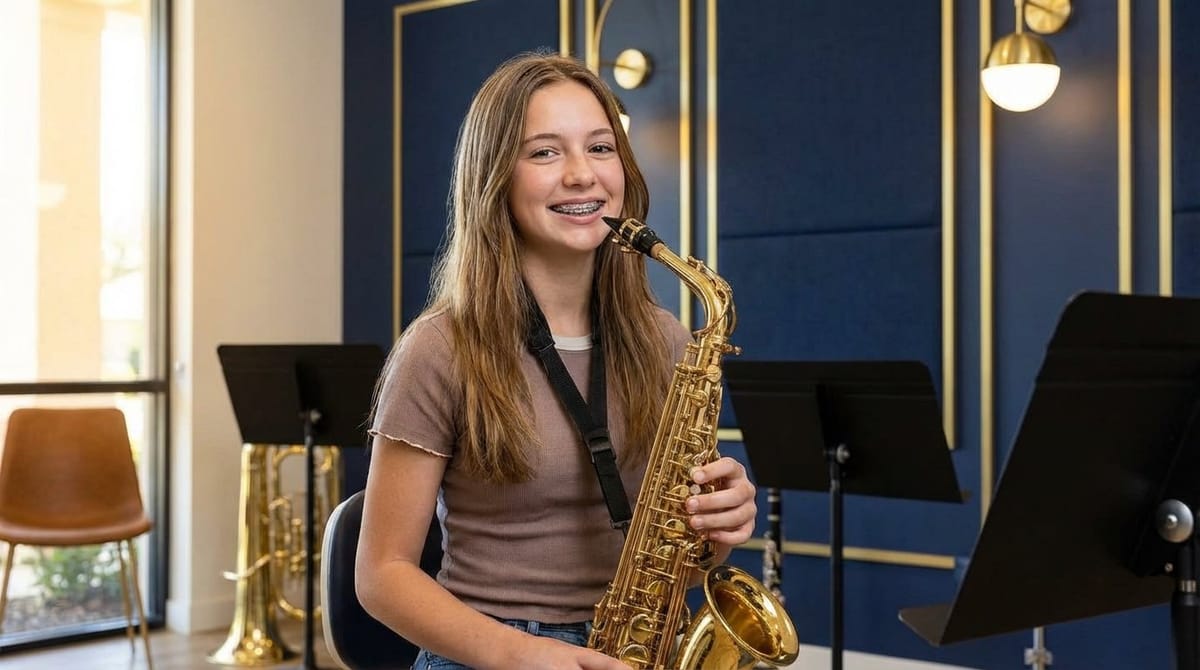
Good news! These instruments are considered the easiest to master with braces. The reed rests mainly on the lower lip, and adaptation is generally quick.
🎶 Transverse Flute
Unique positioning
The flute requires precise lip positioning and fine control of airflow. Adaptation may take time, but remains entirely manageable with practice.
7 Practical Tips for Musicians
1. Orthodontic Wax: Your Best Ally
Apply wax to the brackets that come into contact with your instrument. This creates a protective barrier that reduces irritation and improves comfort during playing.
Pro tip: Always keep wax in your instrument case!
2. Reduce Pressure
Learn to play with less pressure against your lips. Compensate by working on your breath control and diaphragmatic support. This technique often improves sound quality in the long run!
3. Start with Short Sessions
After getting braces or an adjustment, practice in 10 to 15-minute intervals. Gradually increase the duration as your lips adapt.
4. Consider Softer Reeds
For clarinetists and saxophonists, temporarily switching to a softer reed can make sound production easier during the adaptation period.
5. Plan Your Adjustments
If you have an important concert or audition, inform your orthodontist. It's sometimes possible to schedule adjustments to minimize discomfort during crucial periods.
6. Consider Clear Aligners
For some musicians, aligners like Invisalign offer a considerable advantage: they can be removed during performances and important rehearsals.
7. Protect Your Lips
Use a moisturizing lip balm and avoid playing with chapped or irritated lips. Healthy lips adapt better to braces.
A Normal Adaptation Period
It's important to know that most musicians regain their playing level within 4 to 8 weeks. Some even report that the experience forced them to improve their technique!
Common testimony: "At first, I had trouble reaching high notes. After a few weeks of patience and adaptation, not only did I regain my level, but I also developed better breathing technique."
The Investment Is Worth It
Remember that orthodontic treatment is temporary, but the benefits are permanent. An aligned smile can even improve your embouchure in the long term by correcting tooth and jaw positioning problems.
At Dr. Benguira's Orthodontic Center, we understand the specific needs of musicians. We can adapt your treatment plan and advise you on the best options for your instrument.
Are you a musician considering orthodontic treatment? Take advantage of a free consultation to discuss your specific needs and find the ideal solution for you.
Article written by Clara Morgan, Orthodontic Assistant
Dr. David Benguira Orthodontic Center
www.monorthodontiste.org