Orthodontist in Saint-Eustache: A Complete Guide to Choosing Right in 2026
How to choose an orthodontist in Saint-Eustache? When to consult? What options for children, teens and adults? Answers from Dr. David Benguira.

Choosing an orthodontist in Saint-Eustache means choosing far more than dental alignment: it means committing to a process that involves occlusion, function, TMJ health, and even sleep quality in some cases. Here's what you need to know to make an informed choice — for yourself, your teenager, or your child.
Why an orthodontist rather than a general dentist?
In Quebec, the title orthodontist is protected by the Order of Dentists. It refers to a dentist who has completed 2 to 3 additional years of specialized university training after their doctorate in dental medicine. This training focuses exclusively on tooth movement, craniofacial growth, biomechanics, and the management of complex cases.
| Type of case | Why a specialist? |
|---|---|
| Occlusion problems (underbite, overbite, crossbite) | Advanced biomechanical diagnosis |
| Combined treatments with maxillofacial surgery | Multidisciplinary coordination |
| Patients with TMJ dysfunction or severe bruxism | Integrated TMJ approach |
| Pediatric cases requiring interceptive orthodontics | Understanding of craniofacial growth |
| Sleep apnea cases that may benefit from oral appliances | Collaboration with sleep physician |

Children: why a first evaluation around age 7?
The American Association of Orthodontists and the Association of Orthodontists of Quebec recommend a first orthodontic evaluation around age 7, even if no problem is visible. At this age, the first permanent molars have erupted and the orthodontist can detect:
- developing skeletal problems (narrow jaw, asymmetric growth);
- risks of future dental crowding;
- harmful habits (thumb sucking, mouth breathing, atypical swallowing);
- impacted or congenitally missing teeth.
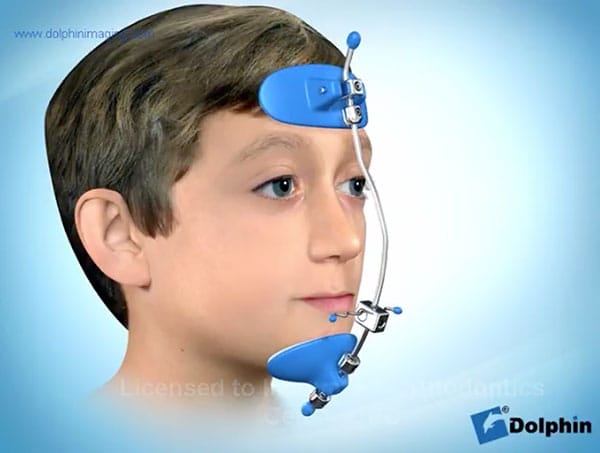
💡 In most cases, no treatment is started immediately. The evaluation simply allows us to plan the right time to intervene, or to monitor growth. When early treatment is needed, we speak of interceptive orthodontics: a simple appliance can prevent complex surgery in adulthood.
Teenagers: braces, aligners, or hybrid approach?
Adolescence remains the optimal period for most orthodontic treatments, as bone growth facilitates corrections. Today's options:
🔧 Traditional metal braces
Time-tested, versatile, economical, ideal for complex cases.
✨ Ceramic (esthetic) braces
Less visible, recommended for appearance-conscious teens.
🌀 Invisalign Teen / Spark aligners
Transparent, removable, suitable for mild to moderate cases and disciplined teens (22 hours/day minimum).
🎯 LightForce and self-ligating brackets
Recent technologies, interesting depending on the case but not systematically superior.
⚠️ The right choice depends on diagnosis, lifestyle, patient discipline, and budget. A good orthodontist never pushes a single technology — they recommend the one that best serves your case.

Adults: it's never too late
📊 Nearly 30% of our new patients in Saint-Eustache are adults — a figure that has been steadily growing since 2020.
Motivations vary: aesthetics, preparation for an event (wedding, professional photos), correction of a relapse after teenage treatment, or functional improvement (chewing, TMJ, sleep).
Options for adults:
- Invisalign and Spark: transparent aligners, ideal for professionals who wish to remain discreet;
- Lingual orthodontics: brackets placed on the inner surface of the teeth, 100% invisible;
- Ceramic braces: discreet and affordable compromise;
- Mini-screws (TADs) and accelerated orthodontics: modern technologies to reduce treatment duration.
For adults, occlusion stability and long-term retention become priorities, as the bone has lost its juvenile plasticity.
What an orthodontic evaluation can verify
| Step | Detail |
|---|---|
| 🩺 Clinical examination | Extra-oral and intra-oral |
| 🦷 Occlusion analysis | Static and functional |
| 📷 3D imaging (CBCT) | If required to visualize roots, bone, and sinuses |
| 💻 Digital intra-oral scanner | No unpleasant impressions |
| 📋 Discussion of options | Personalized treatment plan |
| 💰 Cost estimate | Payment terms and insurance verification |
✅ In Saint-Eustache, the first orthodontic consultation is entirely free — a standard that should be the norm before any financial commitment.
Occlusion and jaw: the often-forgotten angle
Many patients consult for "crooked teeth" and discover they also have an occlusion problem (the way the upper and lower teeth fit together). An imbalanced occlusion can contribute to:
- TMJ pain, clicking or locking;
- bruxism (nighttime clenching or grinding);
- morning tension headaches;
- premature tooth wear;
- in some cases, nighttime breathing problems (to be confirmed by a sleep physician).
🎯 A specialist orthodontist always evaluates function, esthetics, and stability as an inseparable trio.
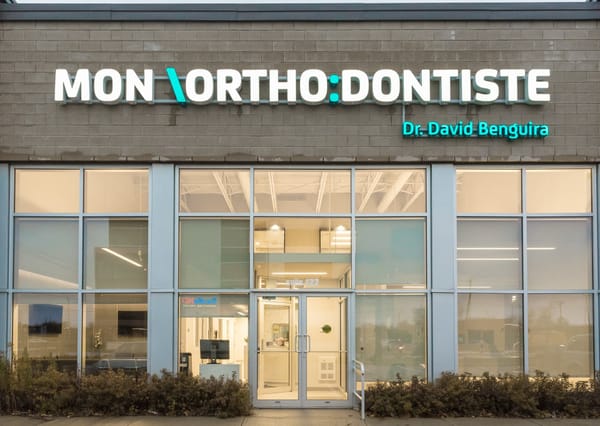
Dr. David Benguira Orthodontic Centre: Saint-Eustache and Montréal
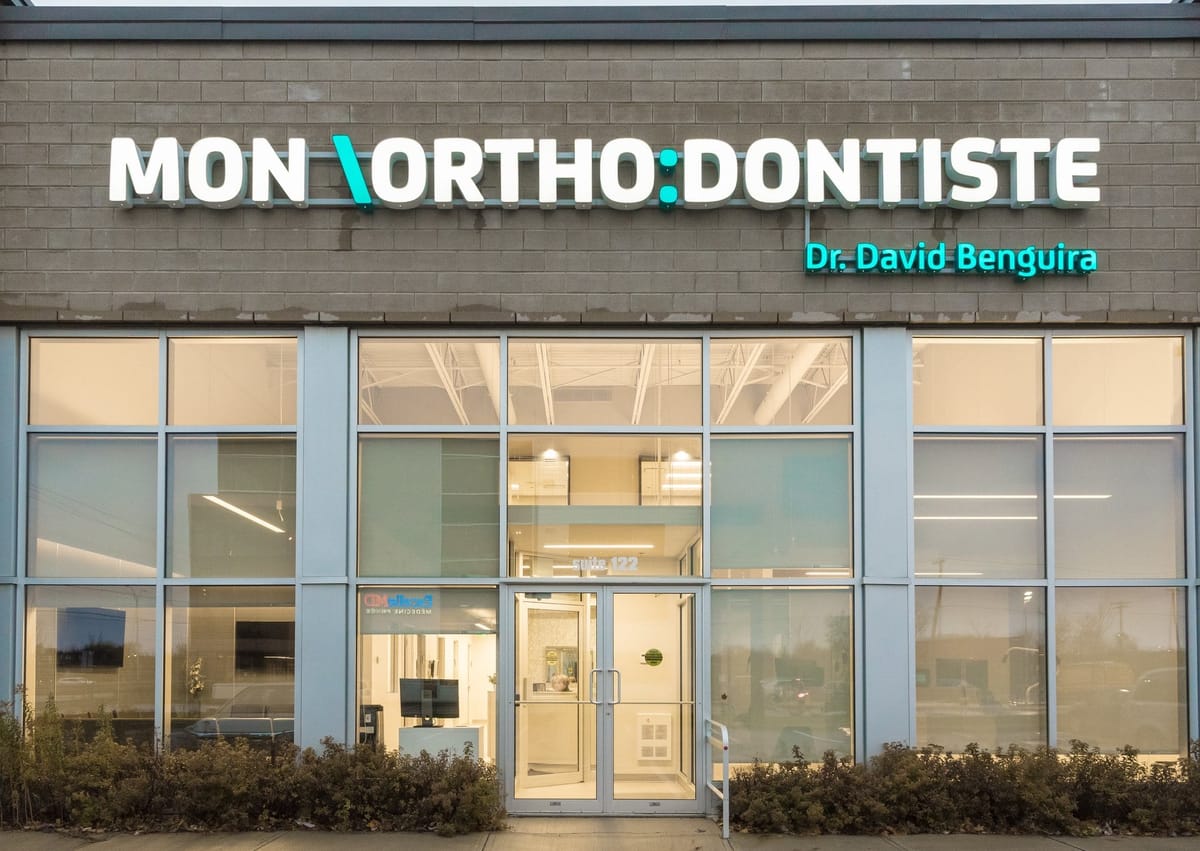
🏥 Main clinic — North Shore
464 rue du Parc, suite 122, Saint-Eustache
Patients from the North Shore, Deux-Montagnes, Boisbriand, Mirabel and surrounding areas.
🏥 Montréal clinic — Côte-des-Neiges
3766 Queen Mary Road, Montréal
For Montréal patients.
Both clinics offer the full range of services:
- Invisalign · Traditional and lingual braces
- 3D CBCT imaging
- Sleep apnea treatment with oral appliances
- Therapeutic Botox for bruxism and TMJ
- Free first orthodontic consultation
When to make an appointment?
👶 In children
Overlapping teeth · Mouth open at rest · Snoring · Asymmetric jaw · Thumb sucking after age 5
🧑 In teenagers
Impacted teeth · Problematic wisdom tooth · Crossbite · Dental trauma
👨💼 In adults
Relapse after previous treatment · Recurrent TMJ pain · Shifting teeth · Esthetic desire · Prosthetic rehabilitation project
💬 An evaluation helps clarify the situation — often, no immediate treatment is necessary, and that itself is a reassuring answer.
FAQ — Your frequent questions
1. How much does an orthodontic consultation in Saint-Eustache cost?
The first orthodontic consultation at the Orthodontic Centre is free. It includes the clinical examination, basic imaging if required, and presentation of options. No commitment is required at this stage.
2. At what age can treatment begin?
A first evaluation is recommended as early as age 7, but most treatments begin between ages 9 and 14. There is no upper age limit — we regularly treat patients over 60 years old.
3. How long does an orthodontic treatment last?
The average duration is 18 to 24 months, but it varies depending on complexity (from 6 months for simple cases to 36 months for surgical cases).
4. Does insurance cover orthodontics in Quebec?
Most private insurance plans partially cover orthodontics for children and adolescents (generally 50% up to a lifetime maximum of $2,500 to $3,500). RAMQ does not cover esthetic orthodontics. Our coordinator verifies your coverage for free at the consultation.
5. Can I consult in Saint-Eustache and continue in Montréal?
Yes — our two clinics share digital records. You can start in Saint-Eustache and continue at Queen Mary if you move or change routine.
A free orthodontic evaluation at our Saint-Eustache clinic answers your questions precisely, with no pressure or commitment.
👉 Book an appointment
MonOrtho:dontiste serves patients in Saint-Eustache and Montréal, with a specialized approach that takes into account smile, occlusion, TMJ, sleep apnea, and facial esthetics when relevant.
Article written under the supervision of Dr. David Benguira, DDS, MSc, FRCD(C), specialist orthodontist, member of AOQ and AAO. Updated in May 2026.